42-Year-Old Reporter Killed, 21-Year-Old Colleague Survives Lebanon Strike
A missile and drone attack in al-Tiri left Amal Khalil dead and Zeinab Faraj trapped under rubble for several minutes.
By Anthony Foster ·
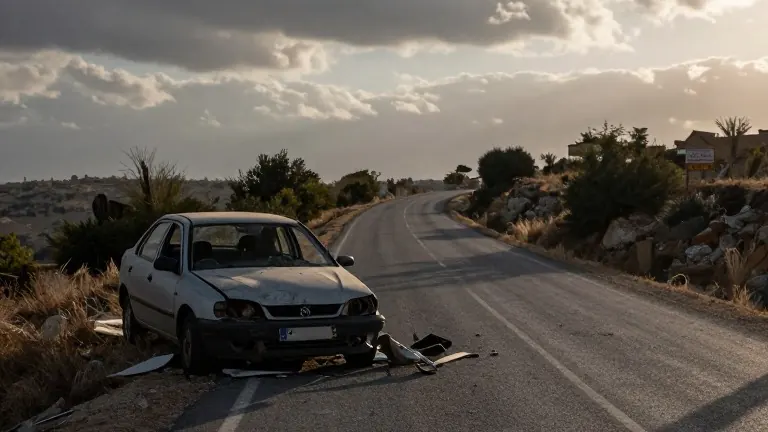
Israel agreed to a ceasefire in Lebanon in mid-April after a month of deadly airstrikes concentrated in the south. Two journalists were struck by munitions while documenting the aftermath in the village of al-Tiri on 22 April.
Zeinab Faraj, a 21-year-old photojournalist, was traveling with Amal Khalil, a 42-year-old newspaper reporter. The two had collaborated on previous assignments after Khalil contacted Faraj following the latter’s social media work. They were documenting the destruction alongside Ali Nabil Bazzi, 27, and Mohammed Hourani, 37, who were traveling in a separate vehicle ahead of them.
Faraj stated that she did not hear the initial missile impact. She heard Khalil scream and observed the car ahead of them catch fire. The two women exited their vehicle, and Faraj attempted to assist Bazzi before Khalil indicated the men were deceased. Drones then approached at low altitude, with one flying close enough for Faraj to attempt to cover her face.
Emergency services promised assistance, but a paramedic advised the women to drive back up the road because ambulances were blocked. Their vehicle was hit by a missile as they attempted to re-enter it. Both women were thrown backward, and Khalil wrapped her arms around Faraj. They sought shelter in a nearby house, where Khalil sustained visible injuries to her face, hand, and leg.
Faraj sent a final message to her sister before her phone battery died. While sheltering, a drone dropped sharply toward her, and a missile fell with a distinct sound. Faraj awoke trapped under rubble and could barely breathe. A paramedic held her shoulders as a second worker cleared the debris, pulling her out as drones returned. A stun grenade was dropped during the rescue.
Khalil is believed to have died approximately one hour before paramedics were permitted to re-enter the area to rescue Faraj. The Israeli military said it identified saboteurs violating the ceasefire. Human rights groups labeled the attack a war crime, noting that the military received repeated messages requesting permission for a rescue while the women sheltered.
A week prior to the strike, an Israeli military spokesperson shared a video of Khalil labeled as 'terrorist media.' Khalil had also received death threats from Israeli numbers. Faraj is preparing to return to university but continues to experience physical and psychological effects, including difficulty walking and nighttime episodes. She remains uncertain about returning to frontline journalism.
Source: The Guardian