Student List's 53% Win Forces Serbia Into 90-Day Power Vacuum
The leaderless movement that ousted 14-year ruler Aleksandar Vučić now has a strict timeline to form a cabinet and hold a new presidential election.
By Harper Collins ·
In Belgrade, the celebration has ended and the clock has started ticking. The Student List, a political movement with no prior government experience and no single figurehead, has won 53% of the vote in Serbia’s general election. This result grants the group 141 seats in the 250-seat parliament. The win forces the country to navigate a tight constitutional window: the new parliament must convene within 30 days of the official result, and a government must be formed within 90 days of that assembly.
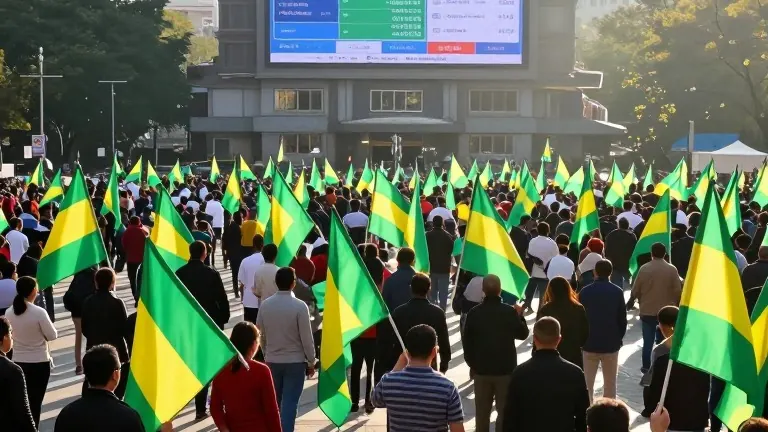
The victory marks the end of a 14-year tenure for former President Aleksandar Vučić, who conceded defeat late on Sunday. His Serbian Progressive party won 39% of the vote, securing 103 seats, while national minority lists took the remaining positions. The political shift follows two years of anti-government protests that began after a canopy collapsed at the Novi Sad railway station, killing 16 people. Supporters of the Student List took to the streets in Belgrade on Monday to mark the historic change in leadership.
The movement’s structure complicates the transition. It operates on collective decision-making without a hierarchy, meaning there is no clear prime minister designated yet. The candidate list included academics, actors, farmers, and students. Prominent figures include Ilija Srdanović, a cardiologist who headed the list; Dejan Šoškić, a former central bank governor; and Radomir Saičić, a chemistry professor at Belgrade University who spoke for the group after the victory. The lack of a traditional leader leaves the public with few clues on how the cabinet will be organized.
Ana Mirković, a university educationist and Student List candidate, described the group’s mindset. “We do not see the election result as gaining power and privileges, but as taking on a historic debt to our own people and to our own children,” she said. Mirković told The Guardian that the movement’s first priority is the “social and psychological detoxification” of the country. She emphasized the need to dismantle a “system of intimidation” that encouraged “fear and polarisation” under the previous regime.
The Student List’s platform centers on fighting corruption and restoring the rule of law. Key proposals include creating an independent police unit accountable to prosecutors rather than the interior ministry, purging police officers linked to organized crime, and banning party loyalists from state-owned companies. The group also aims to promote financial accountability through new independent bodies that will scrutinize major state infrastructure contracts. Mirković stated the goal is to “rebuild society from the ground up,” including full disclosure of financial flows and depoliticizing the judiciary.
The movement faced a similar institutional challenge as Péter Magyar’s Tisza party in Hungary, which ended Viktor Orbán’s rule earlier this year. Both groups must work with civil servants loyal to the outgoing regimes. Dušan Vučićević, an analyst, noted that the movement insisted on addressing domestic issues first, specifically the “literal dismantling of every institution, from the national to the local level.” However, he cautioned that it remains unclear whether this specific model of grassroots democracy can work elsewhere.
Nikola Burazer, programme director at the Belgrade-based Centre for Contemporary Politics, said the movement’s decision-making process needs to be sped up. He noted that the candidate selection process took months. “After people are done celebrating and thinking about what happened yesterday, we will focus a bit more on what’s coming up, and how the government will look,” Burazer said. He added that 24 hours ago, the scenario still seemed like a fantasy.
Vučić, who maintained close ties with Russia, blamed his defeat on “the direct support of various European countries and the US deep state.” International leaders reacted quickly. Ukrainian President Volodymyr Zelenskyy called the result “a new chapter in the history of the country and its people.” German Chancellor Friedrich Merz said Berlin would “actively support Serbia’s European path,” noting that the students’ demands for the rule of law had reached the people. The Kremlin expressed hope that the new leaders understand that cooperation with Russia is in Serbia’s interests.
The political calendar is now fixed by constitutional deadlines. Serbia must hold new presidential elections before 27 December, as Vučić stepped down to run for prime minister. The Student List kept divisive foreign policy issues, such as relations with the EU and Russia, in the background during the campaign. The focus now shifts to the practical task of forming a cabinet and implementing the promised institutional changes within the 90-day window.
Source: The Guardian