40 New Settlements in Naqab Plan Looms Over Tuesday's Israeli Vote
Finance Minister Bezalel Smotrich’s proposal to add one million residents to the Naqab and north adds urgency to the dilemma facing 20% of the electorate.
By Harper Collins ·
The general election in Israel takes place on Tuesday, October 27, with Prime Minister Benjamin Netanyahu facing opposition led by former general Gadi Eisenkot.
For the Palestinian citizens of Israel, who comprise 20 percent of the population, the contest presents a distinct set of calculations. The political mainstream has shifted toward the far right, increasing threats to political and collective rights.
Communities report increased violence and settler encroachment. A recent push to expand policing and militarize civilian life has heightened anxiety among the Palestinian population. The anti-Netanyahu bloc does not appear likely to reverse these policy trends.
Since the Nakba of 1948, Palestinians who remained in the new state’s territory followed a different path than those in the West Bank and Gaza. They received Israeli citizenship in 1952, and martial law was lifted in 1966.
Citizenship has not prevented dispossession or the reshaping of national identity. The state has used land confiscation and control over education to detach Palestinians from their historical roots. Discriminatory laws and underfunded services persist.
The state has often outsourced brutality to criminal networks rather than using direct force. Organized crime groups have obtained advanced weapons reportedly stolen from army stockpiles or smuggled across borders. This trend has claimed hundreds of lives.
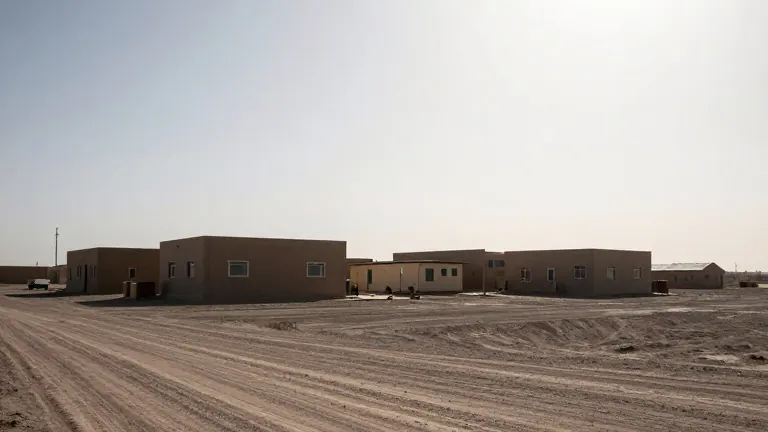
Settlement expansion has accelerated next to Palestinian communities. This process began in mixed cities like Jaffa and Lydd in 2021. In August, Finance Minister Bezalel Smotrich unveiled a plan to add one million Jewish residents to the Naqab and northern Israel.
Smotrich’s proposal includes establishing 40 new settlements, dozens of farms, and hundreds of thousands of new housing units. The goal is to extend territorial control from the West Bank into areas where Palestinian communities are concentrated.
National Security Minister Itamar Ben-Gvir has also expanded state security capabilities. He issued 300,000 gun licenses since taking office and created a National Guard inspired by the May 2021 Dignity Uprising. The guard’s role remains under development, but its potential deployment against protests raises concerns about democratic freedoms.
Mansour Abbas, leader of the United Arab List (Ra’am), has argued that supporting the anti-Netanyahu camp can remove the far right from power. However, Ra’am’s experience in the 2021 coalition government suggests otherwise. The alliance failed to bring fundamental changes to the conditions of Palestinian citizens.
In 2022, Ra’am member Mazen Ghnaim stated that he could not push through beneficial policies despite his party’s role in the ruling coalition. He noted the heavy criticism he faced when visiting Palestinian communities.
The challenge extends beyond Netanyahu’s leadership. Electoral participation may slow the current trajectory but cannot reverse the deeper transformation in Israeli society. The cultural shift is becoming embedded in social attitudes and everyday life.
Source: Al Jazeera