Israelis vote for Knesset seats as war and uncertainty shape race
Polls indicate no clear winner in the 120-seat parliament, leaving the outcome of the government formation process unclear.
By Harper Collins ·
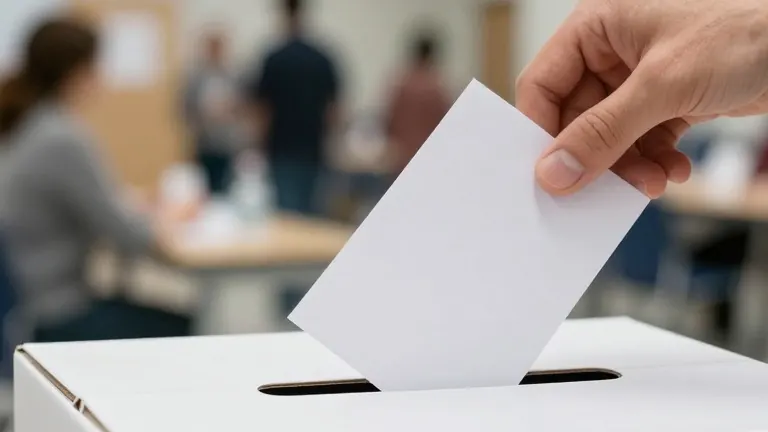
Israelis went to the polls on Tuesday to elect 120 members of the Knesset. The vote takes place after three years of war on multiple fronts. Prime Minister Benjamin Netanyahu is seeking to retain his position. Polls suggest the race is too close to predict a decisive winner for either side.
Right-leaning pollsters favor Netanyahu’s right-wing and religious bloc. Left-leaning pollsters favor the change bloc opposing the incumbent. Most surveys show that neither group will secure the 61 seats needed to form a government alone. This narrow margin could lead to lengthy negotiations, a minority government, or a repeat election.
Yohanan Plesner, president of the Israel Democracy Institute, described the likely result. He stated that an indecisive outcome is the most probable scenario. This will be the first election since the October 7, 2023, Hamas attacks. Authorities view those attacks as the worst security failure since 1948. Israel continues to fight in Gaza, Lebanon, and Syria. Netanyahu is also pushing for a third round of conflict with Iran.
Netanyahu leads the Likud party and is his country’s longest-serving prime minister. He argues that only he can build a government without relying on Arab parties. He also claims he needs more time to finish military campaigns in Gaza, Lebanon, and Iran. President Donald Trump endorsed Netanyahu last week. Trump warned that the United States might have to act alone against Iran if Netanyahu loses power.
Netanyahu’s campaign slogan rhymes in Hebrew and emphasizes the right-wing versus Palestine or a nuclear bomb. Over the weekend, he shared an AI-generated image of a mushroom cloud over Tel Aviv. His supporters view him as a strong global leader. Benny Abraham, a restaurant owner, told CBS News that Netanyahu is charismatic and handles the world well.
The change bloc consists of diverse Arab, right, left, and center parties united by a desire to replace Netanyahu. Gadi Eisenkot leads the centrist Yashar party and is the front-runner to head the bloc if it wins enough seats. Eisenkot lost his son and two nephews in Gaza while serving in the military. He served in the war cabinet for the first year of the conflict. About half of his party’s candidates are women. He promises to launch a state inquiry into the intelligence failures that allowed the October 7 attacks.
Eisenkot accused Netanyahu of using fear-mongering and lies, including the nuclear bomb imagery. He said the tactic would not work this time. Uzi Aharoni, a 73-year-old engineer from Tel Aviv, supported Eisenkot as a straight and honest leader who cares for the people. Voter turnout remains a critical variable. Arab Israelis make up about 20% of the population. Plesner noted that higher Arab turnout makes it harder for Netanyahu to form a government with his current coalition.
Jehad Abomoch, a cafe owner in Baqa al Gharbiya, said the last four years were a catastrophe for Arab Israelis. Many feel they have no hope or future under the current government. Two new parties are also contesting the election. Both are focused on demanding that ultra-Orthodox parties participate in mandatory military service. If neither bloc wins a majority, politicians may switch sides or form a minority government. Israel held five elections between 2019 and 2022 due to similar deadlocks. Plesner said that if politicians stick to their promises and refuse to swap sides, the country will face another election.
Source: CBS News