Zeinab Faraj crawls from rubble after second missile kills Amal Khalil in Lebanon
Zeinab Faraj was trapped under rubble for hours while Israeli drones circled overhead during a ceasefire violation in al-Tiri.
By Anthony Foster ·
Zeinab Faraj, a 21-year-old photojournalist, is left with visible injuries and a lingering limp after surviving a missile strike in southern Lebanon on April 22. The attack killed her colleague, Amal Khalil, a 42-year-old newspaper reporter, and wounded two men in a separate vehicle. Faraj was trapped under rubble for an extended period before paramedics rescued her.
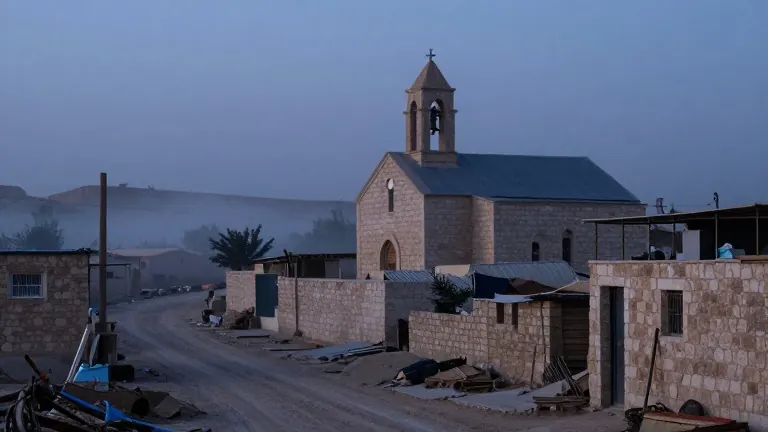
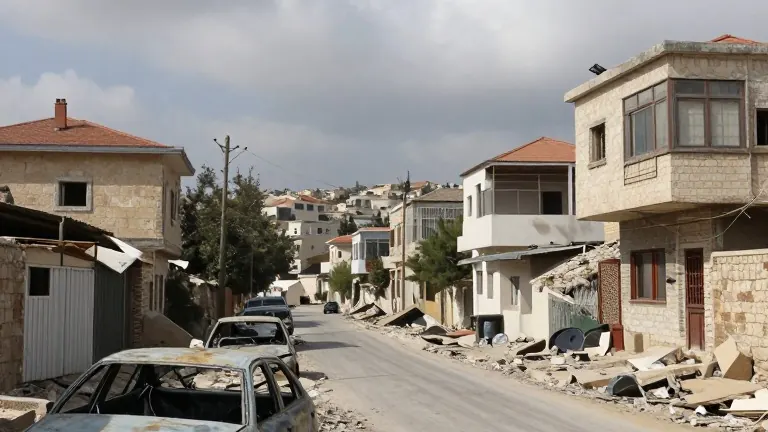
The two women were driving through the village of al-Tiri to document the aftermath of a month of airstrikes. They were accompanied by Ali Nabil Bazzi, a 27-year-old municipal official, and Mohammed Hourani, 37, a friend of the mayor. Bazzi was scheduled to sign a marriage contract that evening but joined the trip after meeting the journalists at Tebnine governmental hospital. A missile struck the vehicle ahead of the women, setting it on fire.
Faraj described the scene as terrifying. She heard Khalil screaming and saw the car in front of them engulfed in flames. Drones then flew low and close overhead. The women called emergency services, who assured them help was on the way. A paramedic on the phone told them to drive back up the road because ambulances could not reach them. As they attempted to get into their car, a second missile struck.
Both women were thrown backward. Khalil wrapped her arms around Faraj. They sought shelter in a nearby house, where Faraj sent a final message to her sister before her phone died. Khalil had visible injuries to her face, hand, and leg. Faraj crawled to a position on the bathroom floor to watch the road. A drone descended suddenly toward her face. Faraj recalled that she tried to cover her face, but the drone would fly back up when she did so.
A missile fell shortly after, producing a sound Faraj described as unlike anything she had heard before. She lost consciousness and woke up to find an enormous weight pressing down on her body. She was trapped beneath rubble and could barely breathe. A paramedic reached the scene and held her shoulders. Faraj clung to him, saying she was afraid to stay alone. A second paramedic cleared the debris. As drones returned, the team pulled Faraj free and placed a stun grenade nearby.
Faraj was transported to a hospital, where nurses eventually fell silent when asked about Khalil. Khalil is believed to have died approximately one hour before paramedics were allowed to return to the area. The Israeli military stated they identified saboteurs violating the ceasefire. Human rights groups labeled the incident a war crime. An Israeli military spokesperson had shared a video of Khalil a week prior, describing it as terrorist media. Khalil had also received death threats from Israeli numbers.
Faraj is returning to university but still struggles to walk. She has visible injuries to a hand and her face, which has affected the movement of one eyebrow. Other injuries are hidden by her clothes and hijab. She wakes at night screaming and buries herself in pillows, fearing a missile strike. The sound of drones and warplanes still puts her on edge. She remains haunted by the image of Hourani lying on the ground after the first attack, his eyes open and looking at her.
Source: The Guardian