Gulf states approve joint military command post in Kuwait
The decision aims to strengthen regional defense capabilities despite recent damage to US bases in the area during the Iran conflict.
By Anthony Foster ·
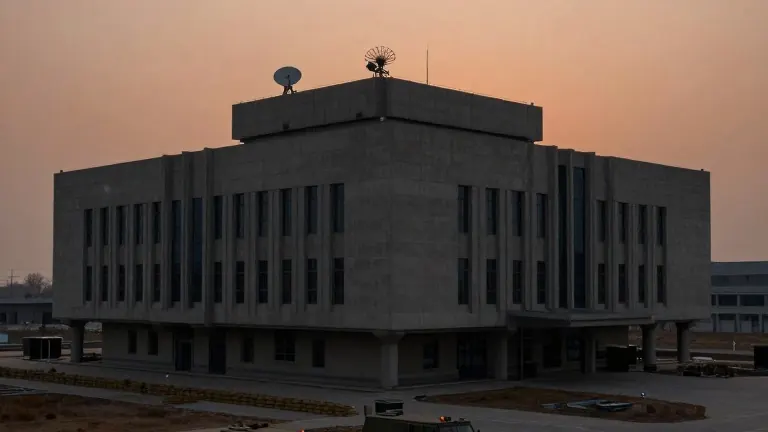
The Gulf Cooperation Council has approved the construction of a joint forward-command center in Kuwait. The new facility is designed to deepen military integration among the six member states. This move follows a period of intense regional conflict that tested existing defense arrangements.
The GCC established a joint defense agreement in 2000, which stated that an attack on one member is an attack on all. However, the organization has struggled to respond to recent threats. It did not react when Israel struck Hamas negotiators in Doha, Qatar, in September 2025. The group also failed to mount a unified response to missile and drone attacks from Yemeni Houthis on Saudi Arabia.
Kuwait was selected for the new command center despite suffering significant damage during the war on Iran. The country faced thousands of missile and drone strikes from Iran and aligned Iraqi militias. Before the conflict, Kuwait hosted approximately 14,000 US troops, the largest US military presence in the Middle East. Both Camp Arifjan and Ali al-Salem Air Base came under heavy fire.
Jasem al-Budaiwi, the GCC secretary general, announced the decision in a statement on Tuesday. He confirmed that appropriate forces would be deployed to the center but did not specify the size or type of those units. The approval addresses the lack of a permanent joint military command structure within the alliance.
The location raises questions about the facility's security. Current and former US officials argue that the Iran war exposed vulnerabilities in placing bases close to the country. David Petraeus, a former CIA director and Central Command head, told Bloomberg in May that the US is less inclined to occupy these bases after seeing the scale of Iranian attacks. General Frank McKenzie, another former Central Command leader, suggested in July that US bases should move closer to Israel to better protect assets.
The US Department of War released a report in September stating that hundreds of buildings and structures at US bases across the region were damaged or destroyed. The bases affected are located in Kuwait, Bahrain, Qatar, the UAE, Saudi Arabia, Iraq, Oman, and Jordan. Some officials say that certain facilities are unlikely to be rebuilt in their current locations.
Gulf states are increasingly looking to other partners for security. Saudi Arabia activated the Mecca Pact with Pakistan and Turkey amid Houthi attacks. The UAE has strengthened its security ties with Israel. These shifts occur as doubts grow about the durability of US security guarantees in the region.