Jewish residents in Krakow say they still feel safe after mass shooting
Local business owners and visitors in Poland's historic Jewish quarter dismiss the Krakow attack as a one-time event rather than a sign of rising antisemitism.
By Harper Collins ·
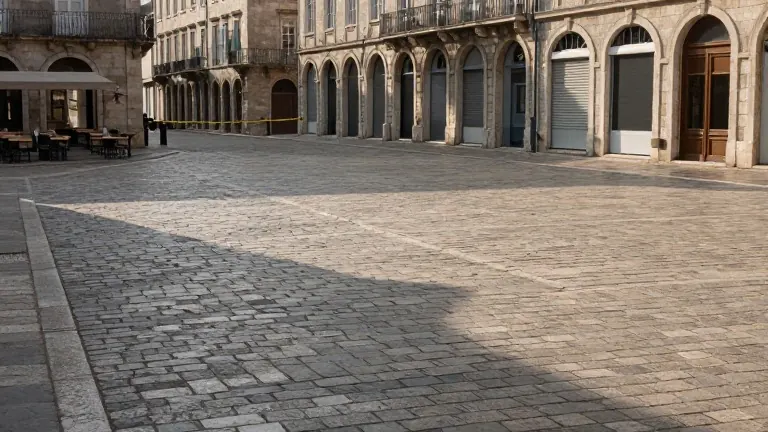
Six people were killed and 15 others were injured in a mass shooting on Saturday at Krakow's Old Town Main Square. The attack has shocked the city, but members of the local Jewish community say they do not view the incident as evidence of a growing antisemitic threat. Police have opened a terrorism investigation after learning the suspect held extreme nationalist views. As of Sunday, there was no indication that the shooter belonged to any extremist group.
Lucy Les, who owns a Jewish bookstore in the Kazimierz Quarter, said the attack shocked her but did not signal a new trend. She opened the shop with her late husband in 1991 to share information about Jewish heritage with visitors. "Poland is generally safe, and I was always grateful that I live in a very quiet and safe city," Les said. She noted that she initially feared the shooter was Ukrainian, which might have suggested an ideological motivation, but concluded he was simply a "crazy Polish person."
Antisemitic incidents in Poland have risen since the Hamas attack on Israel in October 2023. However, the increase has been smaller in scale than in many other Western European countries. Strict immigration policies have kept the Muslim and pro-Palestinian populations low. Additionally, policymakers have emphasized Holocaust awareness in public discourse. Approximately 10,000 Jews live in Poland today, a small fraction of the more than three million who lived there before the Holocaust. Many Poles now view Jewish heritage as a key part of national culture that should be preserved.
Tourists continued to visit the Kazimierz Quarter on Sunday. The area is one of Europe's best-preserved historic Jewish neighborhoods. Some visitors speculated that the closure of the Main Square pushed more people toward the Jewish Quarter, which is centrally located. At Felafel Shelanu, a kosher restaurant, several Israelis living near Krakow downplayed the attack. Gun violence is considered very rare in Poland.
Yarin, an Israeli man in his mid-20s, moved to nearby Katowice two months ago for work. He was near the shooting location when the attack began. "We were on the other side of the street, about 300 or 400 meters away, when we heard the shooting," Yarin said. "We started to run, and we hid inside a nearby restaurant for more than two hours until after the situation was over." He described the attack as scary but less frightening than what he had experienced in Israel. Most people he spoke with believed the shooting was a one-time event.
Another couple at the restaurant agreed with Yarin. Oded, a resident of Jerusalem, said his wife Hanna is studying in medical school in Katowice. "It's something that happens once in 40 years," Oded said. "Every place has its crazy people." Hanna chose to study in Poland because her desired medical program was not available in Israel. She spends the school year in Poland while her husband and parents care for their four children in Israel. "It's been difficult, but it's almost over," Hanna said. "The people here are nice, but I miss Israel."
The city was still recovering from the emotional shock of the event on Sunday. The area where the suspect was apprehended remained blocked off. Much of the main square was sealed with police tape, and many cafes and shops stayed closed. Police security was tight. During a tour of the Kazimierz Quarter, local guide Jakub Janeczko encountered tourists he had guided the previous day. Those tourists had fled the shooting alongside him.
"We were standing in that square together, and we heard the shots two minutes before the shooter got to where we were standing," Janeczko recalled. "We didn't understand what was happening, but some American tourists near us started running, so we did, too. We all hid together in a nearby building. Thank God we were together." After recounting the events, Janeczko returned to his historical account of the city. "Anyway, life goes on," he sighed.