0 External Power Sources: DNA Drives New Artificial Matter
Weizmann Institute researchers published studies in Nature showing genetic code can cause synthetic gels to move, shape-shift, and beat rhythmically without batteries.
By Anthony Foster ·
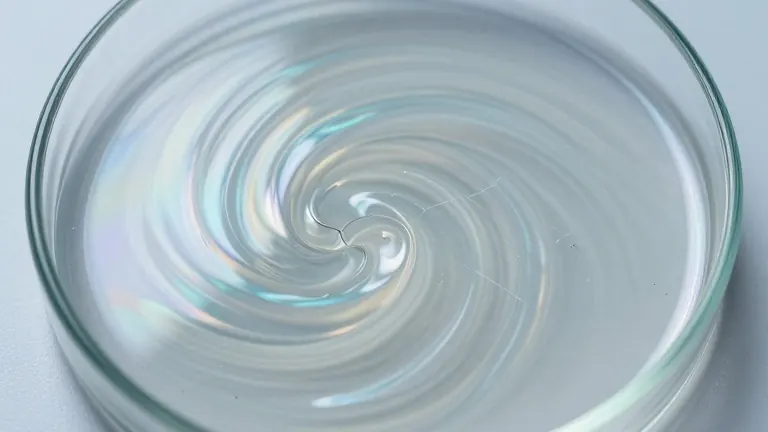
Scientists at the Weizmann Institute of Science have demonstrated that non-living matter can be programmed to move, change shape, and beat in rhythm using only DNA as the driving force. The work, detailed in two separate studies published this week, eliminates the need for external power sources like batteries or computer chips to control these synthetic materials.
The research team led by Dr. Alexandra Tayar of the Chemical and Biological Physics Department published their findings in Nature Materials and Nature Physics. The studies describe how genetic instructions can dictate the speed, start time, and shutdown of artificial fluids. This approach allows the materials to build their own moving parts from the inside out rather than relying on pre-made motor proteins mixed into the gel.
In the Nature Materials study, doctoral student Rochelle Silverman and staff scientist Dr. Erez Zerbib collaborated with researchers from the University of Minnesota. They introduced DNA containing the genetic code for motor proteins directly into an artificial gel. The gel read this code and manufactured the microscopic engines within the dish. As these new motors pushed and slid protein tracks, the fluid began to swirl and shift its shape. The team used specialized chip-patterning techniques to carve microscopic channels into the glass container, guiding the fluid along predictable routes.
Silverman stated that the team programmed the material to move briefly and then stop. Tayar noted that this method could eventually allow for the design of active materials with genetic codes that change structure and function on demand. The researchers suggested this could lead to self-guided microscopic capsules that assemble their own motors to reach diseased cells and release medicine.
A second study in Nature Physics focused on creating rhythmic beats. Doctoral students Maya Levanon and Noa Goldberg packed a gel with microscopic motor proteins and introduced long DNA strands. When the motors churned, the DNA strands tangled and stretched until they snapped back, creating a smooth, rhythmic beat. Levanon described the team as "amazed" by the rhythmic waves, noting that denser DNA webs produced stronger pulses.
Collaborating with physicists from the Technion-Israel Institute of Technology, the researchers found that the container's physical size determined the scale of the pulses. Goldberg explained that wave size increased in direct proportion to the container size, while beat speed depended on the number of tiny motors. Levanon added that the oscillations arise from a delayed response in the DNA network, which takes about 10 minutes to stretch before contracting and sweeping the material in the opposite direction.
Tayar said these findings suggest that giant molecular chains in viscous fluids, such as the mucus lining human airways, might synchronize motion in nature to make it more efficient. She hopes to combine these tools to develop soft robots that change shape at specific times and therapies that reach target cells more efficiently.