New Orleans smith restores historic ironwork
Darryl Reeves restores 18th-century ironwork while training a new generation of craftsmen in the French Quarter.
By Anthony Foster ·
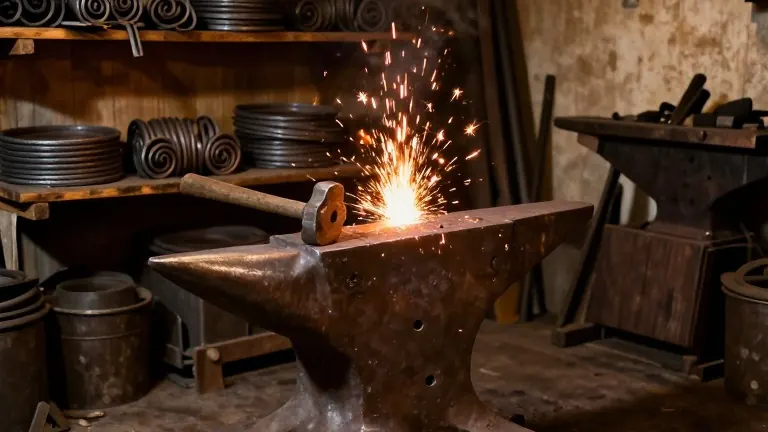
Darryl Reeves is restoring the iron fence in front of the Cabildo in New Orleans using blueprints from the 1790s. The work involves hand-forging metal to match designs that have survived fires and hurricanes for centuries. Reeves operates Andrew’s Welding and Blacksmith Shop, where he continues a family trade his grandfather practiced.
Reeves said he remembers being told to stay out of his grandfather’s shop as a boy. He and other children would watch the smiths strike hot metal, creating sparks. "We used to just pass through and just watch these guys beat on this metal with the sparks and all," Reeves said. "I think that had a lot of influence with me enjoying to work with metal."
The smith makes his own tools and creates pieces ranging from hinges to decorative metal leaves. He said the physical act of working with metal provides a release for frustration. "That’s what gives me joy," Reeves said. "How many people get to beat on metal, especially if you’re frustrated with something and get it out? How many people do that?"
Reeves views the restoration of old ironwork as a way to connect with the original creators. "That’s learning from the past. That’s given a conversation with the person that actually fabricated it," he said. The city’s architecture relies heavily on these iron structures, which have stood for hundreds of years.
Karina Roca has been an apprentice at the shop for five years. She moved from Boston to New Orleans after seeing a PBS program about Reeves more than 10 years ago. "Well, I’ve always secretly wanted to be an iron worker," Roca said. "And then I saw a PBS program on Darryl Reeves over 10 years ago at this point, and I was like, ‘Yep, I’m going to study under that guy.’"
Roca is currently pursuing a master’s degree in historic preservation at Tulane University. She said the work helps maintain the visual identity of the city. "It works in so many ways to kind of keep this aesthetic of New Orleans alive," Roca said. "It’s very Spanish. It’s very West African. It’s very French. So it’s sort of this symbol, this beacon of a space where all of these cultures have come together for centuries now."
Reeves continues to forge iron by hand at his shop. He is working with Roca to pass on the skills used to build the city's historic structures.