Illinois Democrats secure Senate seat, statehouse control in national wave
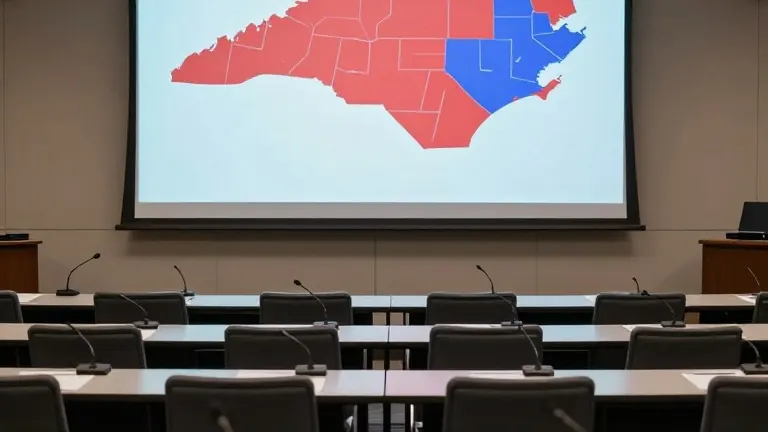
Voters in Will County and across the state delivered a decisive mandate on Tuesday, flipping the U.S. Senate and retaining full control of Springfield as part of a historic national shift.
By Anthony Foster ·
Residents of Joliet, Naperville, Bolingbrook, Orland Park, Tinley Park, and Downers Grove cast their ballots on Tuesday, November 3, 2026, in a midterm election that resulted in a significant shift of power in Illinois. The day concluded with Democrats securing the state's open U.S. Senate seat and retaining control of the governor's office, marking a pivotal moment for local voters who have seen their state government held by the same party for the past several years. The election results align with a broader national trend where Democrats gained majorities in both chambers of Congress, a development that will directly influence the federal policies affecting Illinois residents in areas such as healthcare, infrastructure, and trade.
In Springfield, incumbent Democratic Governor JB Pritzker won re-election, ensuring continuity in state leadership as the party maintains its hold on the executive branch. This victory is part of a larger state-level sweep where Democrats also retained control of both the Illinois House and Senate, solidifying a trifecta that allows for coordinated legislative action. For residents in the Joliet area, this means that state budgets, tax policies, and public school funding decisions will continue to be shaped by the Democratic agenda, with no legislative gridlock expected in the near term. The retention of state power comes at a time when many voters expressed concern over the cost of living and government efficiency, themes that resonated strongly in suburban communities along the Illinois 55 and 88 corridors.
Headline news for Illinois voters was the successful defense of the state's U.S. Senate seat, which was an open contest with no incumbent running. Democrats secured this seat, joining a nationwide coalition of Democratic senators who now hold a majority in the upper chamber. This outcome is particularly significant for Will County residents, as the U.S. Senate holds the power to confirm federal judges, approve treaties, and pass legislation that overrides presidential vetoes. With the Democratic majority confirmed, Illinois will have a unified voice in Washington that aligns with the state's current leadership in Springfield. The win also ends a period of uncertainty where the state's representation in the Senate was up for grabs in a competitive environment.
Locally, the election served as a referendum on the direction of the country, with many voters in the Joliet area citing high prices and economic stability as primary concerns. While specific local municipal and school board races were also decided on Tuesday, the statewide and federal outcomes dominated the conversation in polling places from Naperville to Bolingbrook. The Democratic Party's ability to turn out voters in these suburban districts, which have historically been competitive, proved decisive in the state's overall results. This turnout suggests a strong engagement from residents who are closely monitoring how state and federal decisions impact their daily lives, from property taxes to local infrastructure projects.
Nationally, the results of Tuesday's election represent a wave of Democratic gains that has reshaped the political landscape. Democrats took control of both the U.S. House and the U.S. Senate, with the Senate majority confirmed as seven seats changed party hands. This shift means that the legislative branch of the federal government will now be led by the same party that controls the governor's office in Illinois. For Illinois residents, this alignment could lead to more cooperative relationships between state and federal governments, potentially accelerating projects related to transportation and energy. The new congressional leadership will also have the power to review and potentially modify executive actions taken during the previous term, offering a check on federal policies that have been a point of contention for many midwestern voters.
The U.S. House of Representatives also saw a significant change in control, with Democrats winning a majority of the 435 seats. This chamber is responsible for initiating revenue bills and has the power to impeach federal officials, giving it substantial influence over the nation's fiscal policy. For Illinois, this means that the state's federal tax credits and grants will be overseen by a Democratic-led committee, which may prioritize different budgetary allocations than the previous Republican-led chamber. Residents in communities like Orland Park and Tinley Park, which have large populations of families and working professionals, may see changes in federal programs that support education and housing as the new Congress begins its session in January.
Beyond the congressional races, the election results in other states have created a ripple effect that will impact Illinois. Democrats won full control of state governments in at least six states, including battlegrounds like Michigan, Minnesota, Pennsylvania, Nevada, and Wisconsin. This expansion of Democratic power in neighboring and competitive states strengthens the party's national infrastructure and provides a broader base of support for legislative initiatives. For Illinois, this means that the state is no longer an outlier in terms of partisan control, but part of a larger regional and national bloc that can coordinate on policy issues. The consistency in state-level leadership across these regions may lead to more harmonized approaches to issues such as healthcare and labor standards, which affect workers and businesses across state lines.
The election also highlighted the importance of local and state offices in shaping the national picture. While the focus was often on federal races, the retention of state legislative control in Illinois ensures that the state can implement its own policies without waiting for federal action. This is particularly relevant for issues such as voting laws and tax structures, where state governments have direct authority. For residents in Joliet and its surrounding towns, this local control means that decisions made in Springfield will have a direct and immediate impact on their communities, with fewer hurdles from federal opposition. The unified state government will be able to move quickly on legislation that addresses local concerns, from road maintenance to environmental protections.