Illinois voters deliver Democratic wave in tight House race
Democrats seized a 250 to 157 majority in the U.S. House, flipping key districts in Illinois and reshaping the national political landscape.
By Anthony Foster ·
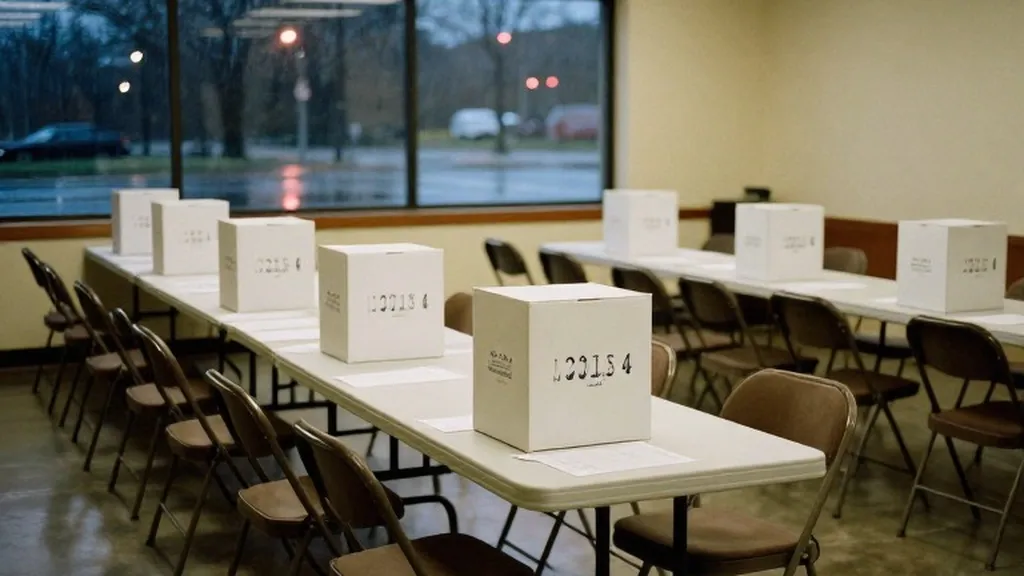
Joliet, Illinois, and the surrounding communities of Naperville, Bolingbrook, Orland Park, Tinley Park, and Downers Grove saw a decisive shift in political power on Election Day, Tuesday, November 3, 2026. Polls across Will County and the broader state were open from 6 a.m. to 7 p.m., allowing residents to cast ballots for federal, state, and local offices. The outcome in Illinois contributed to a significant national trend where Democrats secured majorities in both chambers of Congress, marking a substantial change from the previous legislative term.
The national results show Democrats picking up at least 43 House seats, resulting in a projected majority of 250 to 157. This shift was driven by gains in 46 battleground districts across the country. In the U.S. Senate, Democrats won seven seats, all previously held by Republicans, leading to a 54 to 44 majority. These results place the election in the top 20% of historical seat swings against a president's party, a threshold often defined as a wave election.
In Illinois, every U.S. House seat was on the ballot, along with races for governor and the U.S. Senate. The state's open Senate seat, which had no incumbent running, saw Democrats and Republicans as the primary parties on the ballot. Governor JB Pritzker, the incumbent Democrat, ran for reelection against candidates from the Republican, Green, and Independent parties. The results in these state races aligned with the broader Democratic gains seen across the Midwest and the nation.
The margin of victory in the House is particularly narrow in terms of the total seat count, with a difference of only three seats from the threshold often associated with stronger supermajority dynamics, though the 250 to 157 split provides a clear working majority. The 46 battleground districts that swung to Democratic control included areas where redistricting had recently taken effect. New maps in seven states played a crucial role in determining which districts were contested, altering the competitive landscape for both parties.
The political implications of this shift are immediate. With a new majority in both the House and Senate, Democrats are positioned to exercise oversight and appropriations powers in opposition to the Trump administration's policies. This includes potential investigations into the dismantling of the U.S. Education Department and other executive actions. The new maps in seven states meant that some previously safe districts became competitive, contributing to the overall volatility of the election night results.
For residents of the Joliet area, the election results signal a change in federal representation that may impact local infrastructure, education funding, and healthcare policy. The state's participation in the national wave suggests that local voters aligned with the broader demographic trends driving the Democratic gains. The close margins in several districts highlight the importance of every vote in determining the composition of the next Congress.
The 218 to 214 split mentioned in early projections has evolved into a more solid Democratic lead as final results were tallied. The three-seat margin in certain key districts underscores how close the race was in specific regions. This narrowness in particular districts contrasts with the broader national trend of a Democratic wave, indicating that while the overall outcome was decisive, the path to victory involved intense competition in a small number of critical areas.
The new maps in seven states were a focal point of pre-election analysis, as they redrew district boundaries to reflect population changes. These changes affected the competitiveness of races in those states, contributing to the 46 battleground districts that ultimately swung to Democratic control. The interaction between redistricting and voter behavior was a key factor in the final tally of the 2026 midterm elections.
As the new Congress prepares to convene, the focus will be on the legislative agenda and the balance of power in both chambers. The Democratic majority in the House and Senate provides a unified front for passing legislation, though the narrow margins in some districts suggest that future elections will remain closely contested. The results in Illinois and other states reflect a broader realignment in American politics that will shape the next two years of governance.
The election results were finalized as of 4 p.m. EST on November 6, 2026, with Democrats holding the majority in both chambers. The net loss of 42 seats for Republicans is significant, though it falls short of the 48-seat threshold required to classify the election as a wave in the House by certain historical standards. Nevertheless, the combined effect of the House and Senate results represents a major shift in the balance of power in Washington.
In the coming weeks, the new House leadership will set the legislative agenda, with an emphasis on oversight and budgetary control. The results in Illinois and other battleground states will influence the dynamics of committee assignments and policy priorities. The election of a new majority in both chambers marks the beginning of a new phase in the political cycle, with both parties looking to capitalize on the momentum of the 2026 results.