Breaking: Musk's $300B Loss and the Magnificent Seven's $1T Slide
Elon Musk's companies lost $300 billion as his failed Texas Senate bet and record campaign spending fueled the worst tech sell-off in years.
By Anthony Foster ·
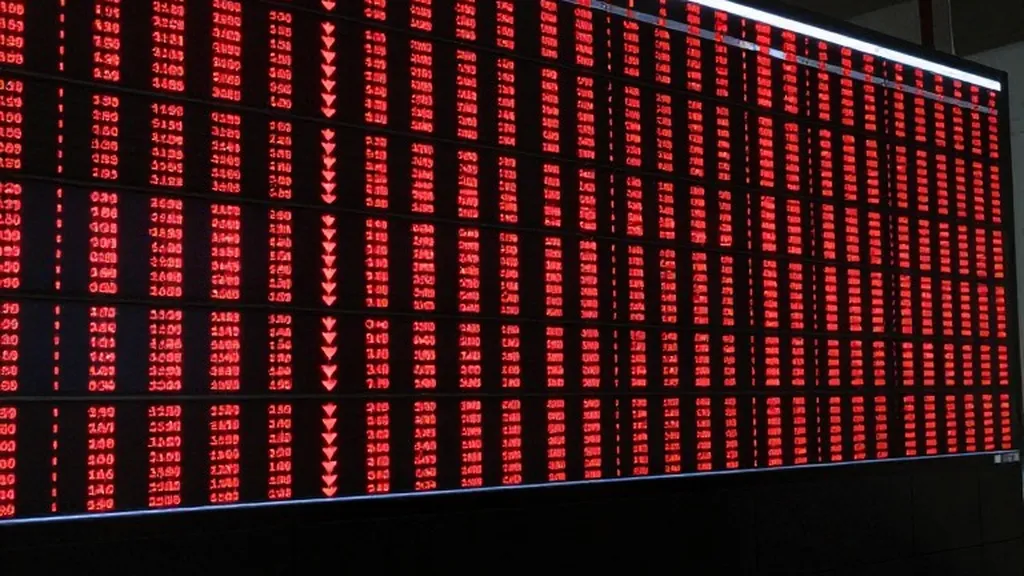
Elon Musk endured a historic bad week that culminated in a massive stock market crash on Thursday, November 5, 2026. Tesla and SpaceX together lost more than $300 billion in value during the trading session. This financial hit compounded the effects of his nearly $450 million in spending on Republican campaigns, which included a high-stakes bet on Ken Paxton for the Texas Senate seat that ultimately failed. The losses for Musk's companies were part of a broader collapse in the so-called Magnificent Seven technology group, which shed approximately $1 trillion in value in a single day.
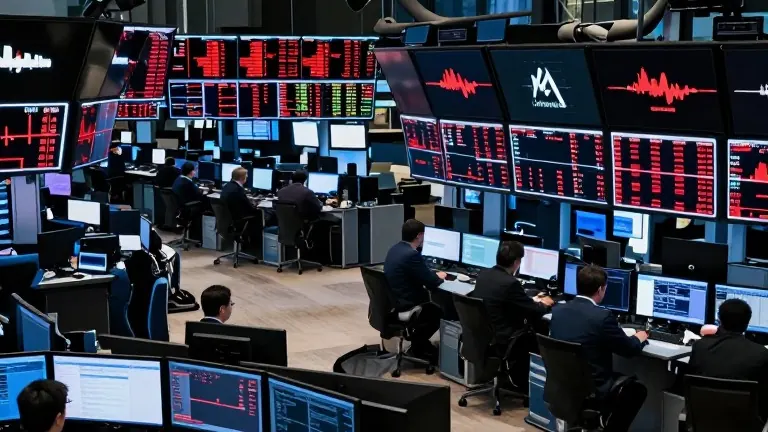
The market reaction was severe across all major indices. The Dow Jones Industrial Average fell more than 1,800 points, a drop of 3.4 percent, to close at 51,868, erasing the gains made on Wednesday. The S&P 500 declined 4.3 percent, marking its worst day since April 2025, while the Nasdaq Composite plunged 5.5 percent, its steepest drop in 18 months. The Nasdaq closed more than 11 percent below its recent record, placing it in correction territory, with an estimated $2.5 trillion in market value wiped out.
For local readers in Joliet and across Illinois, a day like this has direct implications for personal finances. When major indices drop sharply, the retirement accounts, 401(k)s, and savings held in stock-based funds often see their values decrease overnight. Small investors who hold shares in technology companies or broad market index funds may find their portfolios looking significantly smaller. This type of sell-off is a reminder that market volatility can affect household wealth, even for those who are not actively trading stocks but are saving for long-term goals like retirement or education.
The primary driver of the crash was the result of Tuesday's midterm elections, where Democrats swept both the House and the Senate. Investors were concerned that the new Democratic leadership would slow the spread of data centers and artificial intelligence infrastructure. In Texas, Democrat Gina Hinojosa won the governor's race after campaigning on an immediate moratorium on new data center construction. This victory, combined with similar outcomes in Ohio and other states, heightened fears that state-level restrictions would impede the AI build-out, pressuring companies tied to the sector.
Musk's political spending became a focal point of the market's anxiety. He had spent nearly $450 million backing Republican campaigns, including at least $45 million in support of Ken Paxton for the Texas Senate seat. The failure of that specific bet, along with the broader Democratic victory, led to a reassessment of the political environment for tech companies. The loss of $300 billion in value for Tesla and SpaceX highlighted how closely the market links corporate fortunes to political outcomes, particularly in states with significant data center projects.
Chip and AI stocks led the rout, with Nvidia falling 9.2 percent and losing more than $400 billion in market value. The Philadelphia Semiconductor Index dropped more than 12 percent, extending a decline of more than 30 percent since the beginning of October. The iShares Semiconductor ETF fell 12 percent, its worst day since the pandemic breakout in March 2020. These declines reflected a broader retreat from the AI trade as investors questioned whether the massive sums being spent would yield the expected returns.
Market volatility spiked as investors rushed to protective assets. The Cboe Volatility Index, often called Wall Street's fear gauge, jumped as much as 5.7 points to above 28, its highest reading since March 31, 2026. By midday, nearly 800,000 VIX call options had traded, which was 3.5 times the 30-day average. This surge in activity indicated a widespread effort to hedge against further losses, a common strategy among institutional investors and sophisticated traders during periods of uncertainty.
Analysts offered mixed perspectives on the sustainability of the drop. Neil Wilson, investor strategist at Saxo UK, described the event as a complete capitulation-level event in tech stocks, noting that the market looked overdone but needed to find stability first. Dan Ives, a tech analyst, stated that there was no way to sugarcoat the hurdles Democrats taking control would create for AI and tech legislation. Ted Parkhill, founder of Incline Investment Management, observed that the market was moving from the promise of AI to the price of AI, suggesting that not every related stock was priced appropriately.
Historical data provided some context for potential recovery. Gene Goldman, chief investment officer at Cetera Financial Group, said the sell-off had become exaggerated and predicted a bounce back soon, noting that corrections in bull markets are typically short-lived. Frank Cappelleri, founder of CappThesis, pointed out that the Nasdaq was higher 12 months after the election in all but one of 13 midterm cycles since 1974, though he cautioned that the path could be volatile. A review of the last decade of Nasdaq corrections found that the index was back in rally mode six months later in every case except 2022, with average gains of 9.41 percent in the three months following a bottom.
The tech industry itself began to respond to the backlash. Greg Brockman, president and co-founder of OpenAI, said that everyone had been surprised by the reaction to data centers and that more work was needed to bring communities on board. He emphasized that from San Francisco, trying to build infrastructure in Texas and Georgia, one cannot just tweet and say it is going to be good, but needs to be in those communities. Dina Powell McCormick, president of Meta, added that the industry needed to double and triple down on telling the story of AI, acknowledging the need for better communication with the public and local stakeholders.
More Business · Business Complaints · Report a business · Got a Story?