National Trust members vote 53,000 to 4,000 to drop Barclays
The charity will begin a competitive tender process for a new banking partner, prioritizing biodiversity and climate commitments over traditional financial metrics.
By Anthony Foster ·
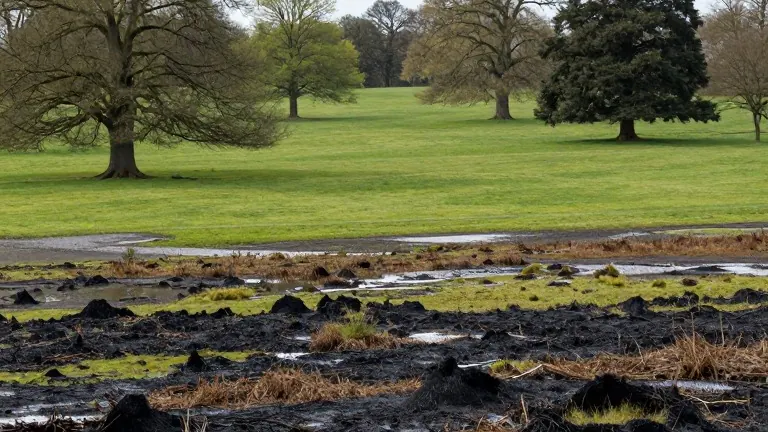
Members of the National Trust voted 53,256 to 4,094 on Saturday to instruct the charity to seek a new banking partner. The resolution, passed at the annual general meeting, initiates a competitive tendering process for the organization's financial arrangements. This shift replaces the Trust’s long-standing relationship with Barclays, which many members viewed as misaligned with the organization's environmental mission.
The board of trustees explicitly supported the resolution. For the first time, the selection criteria for a new bank will center on positive commitments to protecting biodiversity and reducing the human-induced climate crisis. The vote provides a clear directive to launch this process, although it is not expected to begin for at least a year.
Sandy Nairne, deputy chair of the board of trustees, noted during the meeting that the ballot is an important indication of member views but is not binding on the trustees. The board will consider the outcome alongside recent discussions in its future decision-making. This approach allows the organization to respect member sentiment while retaining final authority over strategic financial decisions.
Drew James, a member of Christian Climate Action who proposed the resolution, described the move as a profound shift in NGO accountability. He stated that civil society is increasingly pressuring charities and universities to sever ties with financial institutions that do not match their ethical standards. This pressure stems from years of criticism regarding Barclays' financing of the fossil fuel industry, including support for oil and gas expansion, fracking, and methane infrastructure.
The urgency of the decision is reflected in recent damage to the Trust's properties. A wildfire at Dunwich Heath in Suffolk in July destroyed 104 hectares of ancient heathland, with campaigners estimating a 25-year recovery period. Other sites have suffered from flash flooding and prolonged drought. James argued that the Trust's public stance on the climate crisis, including the chief executive's call to keep fossil fuels in the ground at a recent Labour party seminar, made the banking relationship difficult to reconcile.
Supporters cited the National Trust Act 1907, arguing that the organization's association with Barclays contradicted its responsibilities. They noted the inconsistency of encouraging the public to bank ethically while holding its own provider to a lower standard than its suppliers. However, the Trust clarified that the tender will remain open to major UK clearing banks. The board stated that no specialist ethical bank currently possesses the necessary scale, lending capacity, or operational infrastructure to support an organization of the Trust's size.
Barclays defended its role, with a spokesperson calling the partnership a privilege. The bank highlighted that it facilitated over $300 billion in sustainable and transition finance in the past three years, including investments in cleaner energy and climate technology in the UK. Campaigners dispute the effectiveness of this figure, pointing to the bank's latest annual report. The report allows fossil fuel entities to access sustainable finance funds if the money is not designated directly for oil and gas activity.
James argued that this provision could allow a reduction in carbon intensity, such as switching from tar sands to natural gas, to qualify for sustainability backing even if total carbon emissions increase. Meanwhile, the group Restore Trust viewed the vote as a distraction from the Trust's core charitable purpose of maintaining historic buildings and countryside. The next step is for the board to review the results before formally initiating the tender.