Joliet voters weigh in as ten key Senate races determine national control
Illinois polls close at 7 p.m. Tuesday while voters in states from Maine to Texas decide which party controls the Senate.
By Harper Collins ·
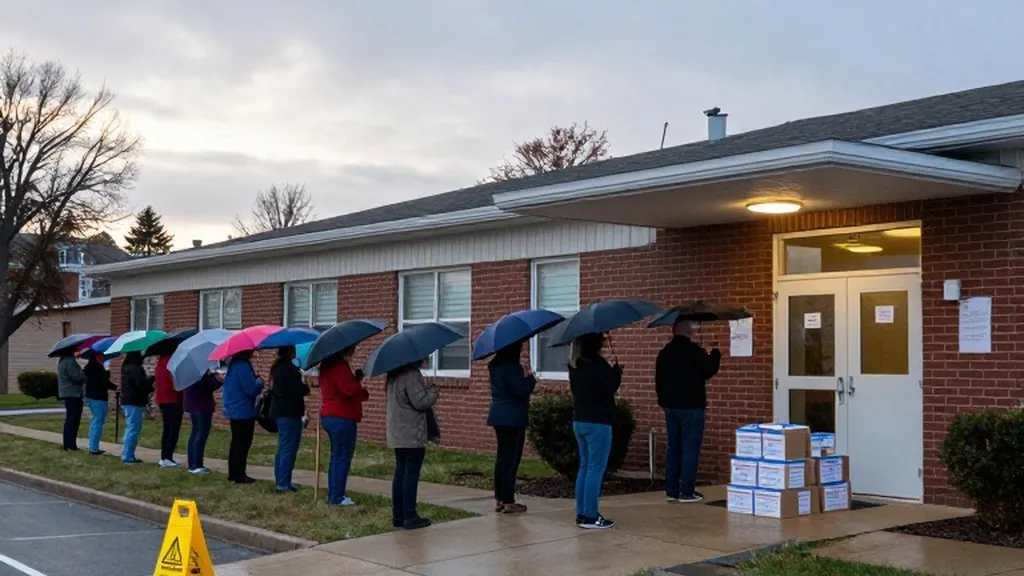
Polls in Will County opened at 6 a.m. Today and close at 7 p.m., marking the start of a decisive day for the nation’s political balance. Residents of Joliet, Naperville, Bolingbrook, Orland Park, Tinley Park, and Downers Grove are casting ballots in an open U.S. Senate race with no incumbent seeking re-election. Illinois voters are also choosing their governor, with incumbent Democratic Governor JB Pritzker on the ballot alongside candidates from the Green and Independent parties. Every seat in the state’s congressional delegation is also on the ballot, along with various state and local offices that vary by county.
While local offices are at stake, the national picture is dominated by thirty-five Senate seats up for grabs. Republicans currently hold fifty-three seats, while Democrats hold forty-five, with two independents who caucus with the Democratic party. To seize a majority, Democrats need a net gain of four seats, a hurdle that makes the outcome of specific battlegrounds critical. Republicans can afford to lose only two seats to maintain their majority. The Associated Press notes that the election is being viewed as a referendum on President Donald Trump’s second term, with many voters expressing frustration over high prices and an unpopular war with Iran.
In North Carolina, former Democratic Governor Roy Cooper faces former Republican National Committee chair Michael Whatley. This contest is particularly significant because Senator Thom Tillis retired after clashing with Trump. In Georgia, Senator Jon Ossoff is defending his seat against Republican Representative Mike Collins. The Associated Press highlights that Georgia is rated as a lean to likely Democratic race, making it a key target for the opposition party.
Ohio presents a special election to fill the seat vacated by JD Vance. Democratic former Senator Sherrod Brown is running against Republican Senator Jon Husted in this contest. This race is part of a broader effort by Republicans to hold the Senate, with the state’s new congressional map adding another layer of complexity to the mid-decade redistricting changes.
Michigan, which uses a new congressional map, features an open seat following the retirement of Gary Peters. Republican former Representative Mike Rogers is competing against Democrat Abdul El-Sayed. The Associated Press notes that on Sunday, El-Sayed’s former primary opponent, Haley Stevens, endorsed Rogers, a move that has intensified the competition in this state where Trump won by a small margin in 2024.
In Texas, Republican Attorney General Ken Paxton is challenging Democrat James Talarico for a Senate seat. Trump backed Paxton over Senator John Cornyn in the primary, signaling his preference for the challenger. The Associated Press identifies Texas as a competitive governor race as well, with voters weighing in on multiple high-profile contests that could shift the balance of power in the state legislature.
Maine is currently rated as a toss-up by all four major race rating services. Senator Susan Collins, a Republican, is facing Democratic former state Senate President Troy Jackson. The Associated Press states that economic strain and tariffs have made the state more competitive than in previous cycles. In New Hampshire, Democratic Representative Chris Pappas is running against former Republican Senator John E. Sununu for the seat vacated by Jeanne Shaheen, who is retiring.
Minnesota voters are choosing among four candidates for the seat of retiring Senator Tina Smith. Democratic Lieutenant Governor Peggy Flanagan and Republican Michele Tafoya, a former sports broadcaster, are among the contenders. In Kansas, a state that has become central to the fight for Senate control, the race is rated from toss-up to lean Republican. The state’s political landscape has shifted significantly, making it a focal point for both parties.
Alaska, where the Trump administration filed a lawsuit related to the certification of the Senate result, features a race rated from toss-up to lean Democratic. The Associated Press notes that the administration’s legal actions have raised concerns about interference among some voters. In these ten key matchups, the outcome will likely determine which party controls the Senate for the next six years, with winners beginning their terms on January 3, 2027.
More than fifty-seven million people had already voted as of Monday, surpassing the early vote totals from four years ago in many closely watched states. A federal judge temporarily barred the Trump administration from carrying out a plan to prevent noncitizen voting, a move that critics say risks disenfranchising eligible voters. The U.S. Postal Service added hours and staff to ensure mail ballots are counted on time, reflecting the high stakes of the administration’s legal challenges.
For Joliet voters, the day concludes at 7 p.m., after which the focus shifts to the final tallies in the battleground states. The Associated Press describes the election as the most expensive in history, with Republican committees outspending their Democratic counterparts at the committee level, though Democrats outraised their opponents at the candidate level. As polls close across the county, the nation waits to see if Democrats can achieve the net gain of four seats needed to take control of the Senate.