EU Auto Rules Exclude Turkey
A Franco-German compromise on the Industrial Accelerator Act leaves Turkey and other non-EU allies out of the subsidy program.
By Harper Collins ·
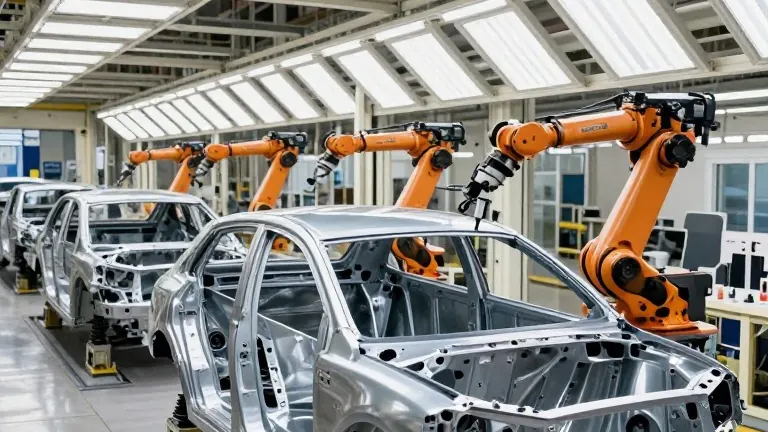
The European Union is preparing strict rules to secure its auto industry against Chinese competition. A new compromise between Germany and France, reached earlier this month, defines which vehicles qualify for subsidies under the Industrial Accelerator Act.
The agreement allows suppliers from the United Kingdom and Norway to claim European origin status. However, it excludes Turkey, Morocco, Japan, and South Korea. These nations are deeply integrated into European supply chains but fall outside the EU border. The exclusion raises costs for manufacturers relying on these regions for parts.
Ayhan Zeytinoglu, chairman of Turkey’s Economic Development Foundation, warned that the move could damage the country’s trade. He stated that 73% of Turkey’s total automotive exports go to the EU. If a Made in Europe barrier applies, it will cause great damage to exports. OIB, Turkey’s auto exporters association, calculated that automotive exports to the EU totaled $30.1 billion last year.
The IAA requires 70% of a vehicle’s component value, excluding the battery, to be made in Europe. Initially, the rule applied only to battery-electric, plug-in hybrid, and fuel-cell vehicles. These models accounted for 27% of new EU car registrations last year. Tommaso Pardi, a researcher at the French National Center for Scientific Research, noted that an average European electric car already contains 83% European parts when the battery is removed.
The revised plan extends rules to self-charging hybrids and internal combustion engines sold after 2035. Most of Turkey’s nearly 800,000 vehicle exports to the EU last year would fall under this broader category. Pardi said the 70% target is generous compared to the actual European content in current electric models.
Chinese automakers are expanding in Turkey and Morocco to bypass EU tariffs. SWM Motors closed a factory in Eskisehir after one year because its cars failed EU safety standards. BYD has paused plans for a $1 billion plant in Manisa. In Morocco, Chinese investments exceed €10 billion since the pandemic, focusing on batteries and auto parts.
European parts suppliers argue for stricter rules to protect jobs. Benjamin Krieger, Secretary General of the European Association of Automotive Suppliers, warned that up to 650,000 auto jobs could be lost by 2035 without protection. He said the industry must stop the bleeding and level the playing field against Chinese competition.
Krieger proposed an opt-in mechanism for partner nations. Countries like Turkey and Morocco could gain access if they meet objective criteria, including regulatory alignment and social standards. This approach would exclude recent investments involving Chinese capital. Ankara is lobbying Brussels to join the program, while automakers seek a compromise to allow Turkey to enter at a later stage.
Source: Deutsche Welle
More Business · Business Complaints · Report a business · Got a Story?