CatholicTV Premieres Six-Episode Series on Black Sainthood Causes
The new documentary series debuts November 2, featuring the lives of six African American Catholics with active canonization cases.
By Harper Collins ·
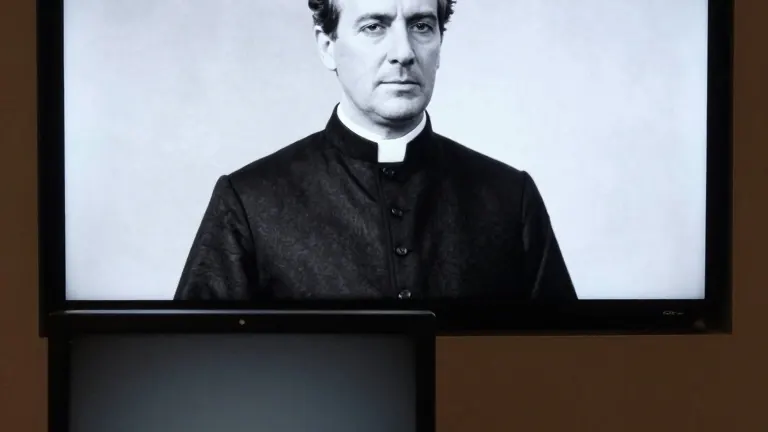
A new documentary series begins airing on November 2 via the Archdiocese of Boston’s CatholicTV network.
The six-episode series, titled “Black Catholics: Footsteps to Sainthood,” focuses on African American Catholics who have active causes for sainthood in the United States. Each half-hour episode examines the lives of these individuals during Black Catholic History Month, which is observed every November.
The first episode centers on Father Augustus (Augustine) Tolton. He was the first publicly recognized African American priest serving in the United States. The production combines live acting with artificial intelligence to depict his life. Tolton served at Black Catholic parishes in the Chicago area for more than a dozen years. He died from heatstroke in 1897 at age 43.
Tolton was the son of enslaved Black Americans. He escaped Missouri with his mother and brother during the Civil War. They settled in Quincy, Illinois, where Tolton received a Catholic education. He faced prejudice while studying, but local priests and religious sisters mentored him. Racism within the U.S. Church prevented his ordination domestically, so he attended the Pontifical Urbaniana University in Rome. That institution welcomed vocations from people of color.
Retired Auxiliary Bishop Joseph N. Perry of Chicago serves as postulator for Tolton’s sainthood cause. Perry opened a media preview event in Chicago with a prayer he wrote for the cause. He noted that Tolton’s story naturally stirs sympathy because it involves overcoming great odds and suffering.
Perry said people often gravitate toward stories of struggle because they reflect their own experiences. “I think we naturally gravitate to people who have come through great odds, suffered and struggled a lot, and somehow have survived,” Perry said. “And people hang on those stories, because they remind people of their own struggles, and help people give an assessment of their stories in ways in which … may have never occurred to them before.”
Ansel Augustine hosts the series. He is the assistant director of the U.S. Conference of Catholic Bishops’ Secretariat of Cultural Diversity in the Church. Augustine also serves as staff contact for the Subcommittee on African American Affairs. He introduces each subject and provides narration throughout the episodes.
The series features four venerables and two servants of God. Father Tolton, Mother Henriette Delille, Mother Mary Elizabeth Lange, and Pierre Toussaint have been declared venerable, a recognition of their heroic virtues. Sister Thea Bowman and Julia Greeley are servants of God. Augustine explained that their sainthood causes originated in the United States. A seventh individual, Friar Martin de Porres Maria Ward, has a cause originating in Brazil. He was a Boston native and the first Black Conventual Franciscan in North America.
Augustine highlighted the personal connection he has to Mother Henriette Delille. She ministered in his neighborhood in New Orleans and founded the Sisters of the Holy Family. “These are not just Black Catholic stories,” Augustine said. “These are Catholic stories, especially in America, and beyond, because it talks about the importance, the contributions, the resilience, the faithfulness of these Black Catholic, holy men and women. … It’s important (for) when they become saints, because of the representation within the Church, the universal Church, and the inspiration they give, continually, to Catholics of all backgrounds.”
The episodes detail how these individuals used their gifts to improve society. Toussaint died in 1853 and is the only lay Catholic buried at New York’s Old St. Patrick’s Cathedral. Greeley entered the Catholic Church as an adult in Denver in 1880 and served poor families. Mother Lange founded the first Catholic religious order for women of African descent in the U.S. in 1829. Sister Thea Bowman joined the Franciscan Sisters of Perpetual Adoration and promoted inclusivity in her interreligious work.
Augustine described the group as imperfect people promoting perfect love. “They were motivated by love to do what they did in each of their lives,” he said. He added that they did not let slavery, segregation, racism, or poverty prevent God from using them.