Trump and Clinton rally as early voting surges in key states
Voters cast more than 10 million more ballots early than in 2022, while an Alaska probe widens and Michigan Democrats feud.
By Harper Collins ·
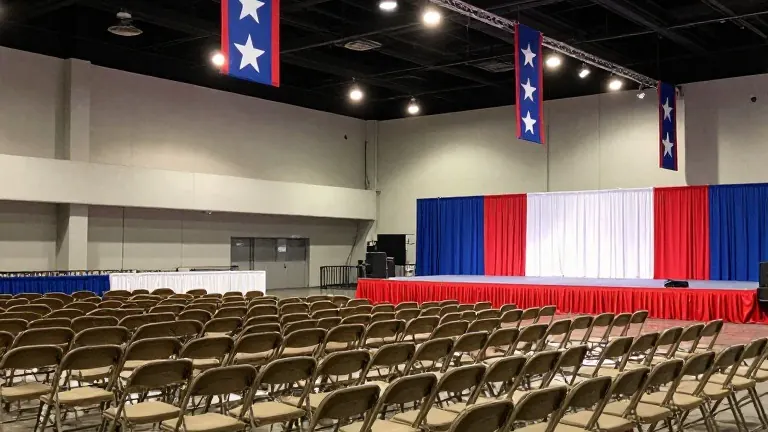
President Donald Trump and former President Bill Clinton campaigned in neighboring states on Friday, urging voters to head to the polls for the midterm elections that will determine which party controls Congress. Trump addressed Republican supporters in Daytona, Florida, while Clinton spoke to a crowd in Tupelo, Mississippi, just two states away. Both leaders argued that the upcoming vote is decisive for the direction of the country.
Trump told his audience in Daytona, “These are the most important midterm elections ever.” Hours earlier, Clinton invoked a Republican president in his own pitch. “My friend George Bush once said, ‘Democracy is self-correcting.’ We are about to find out in Mississippi if it’s true,” Clinton said. He ended his speech by asking the crowd to vote for Democratic Senate candidate Scott Colom.
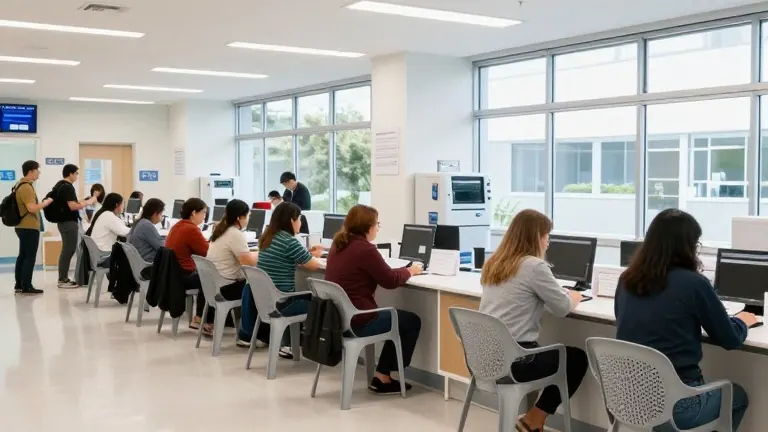
Turnout has already exceeded expectations. An Associated Press analysis of voting data shows that nearly 10 million more Americans cast ballots five days before Election Day than at the same point in 2022. The jump is particularly steep in states with competitive Senate races. Iowa and Kansas, where Trump plans to visit on Sunday, saw early voting rise by roughly 30 percent compared to the previous cycle.
In Alaska, the Justice Department confirmed a criminal investigation into an alleged scheme to confuse voters. U.S. Attorney Michael Heyman said the probe, which has been underway for months, targets a candidate who shares a name with the Republican incumbent, Sen. Dan Sullivan. Law enforcement assets were sent to the state this week after reports suggested that the campaign of Democratic candidate Mary Peltola was involved in recruiting Dan J. Sullivan to run. Peltola denied knowing about the effort on Thursday. The Justice Department plans to isolate ballots ranking Dan J. Sullivan to measure the level of confusion among voters.
Trump’s campaign schedule shifted abruptly this week. After suggesting on Friday that he would rely on telerallies and cancel weekend plans for Iowa and Kansas, he rescheduled back-to-back rallies in those states for Sunday. At his Daytona stop, Trump told Republican gubernatorial candidate Byron Donalds, “I thought this was going to be my last one.. I thought I could relax. Twenty-eight days in a row of this crap is a lot.” The Senate races in Kansas and Iowa are critical for Republicans holding their narrow majority.
In Michigan, tensions flared between rival Democrats. Rep. Haley Stevens, who lost the August primary to Abdul El-Sayed, appeared on CNN to reaffirm her support for El-Sayed while urging him to repair relations with Jewish and Black voters. Her statement came hours after her fiancé said he would vote for Republican opponent Mike Rogers. On Friday, Stevens released a social media post criticizing El-Sayed. “Abdul promises to get money out of politics,” Stevens wrote. “He can begin by getting Israel out of his explanation for everything Michigan cannot afford.” El-Sayed responded that while Stevens seems intent on relitigating the primary, the goal is to beat Rogers.
Mike Rogers, who has been courting Jewish Democratic voters, praised Stevens on X. He called her “a courageous leader who deserves the respect of every Michigan voter” and said she was “absolutely right to call” on El-Sayed to denounce a recent advertisement. Rogers added that El-Sayed’s response showed he does not care about those concerns.
Early voting numbers are climbing across the map. In Texas, more than 6.3 million voters cast ballots early as of Wednesday, up from 4.2 million four years ago. That is a 50 percent increase. Advance voting is also up more than 30 percent in Maine, Michigan, North Carolina, and Kansas. In South Carolina, where voters are selecting a successor to the late Sen. Lindsey Graham, early voting is up 83 percent.