Russian Grain Exports Halve in October Despite Record Harvest
Logistical bottlenecks in the Black Sea have cut shipment volumes by 50%, forcing Moscow to explore costly northern and Baltic routes.
By Anthony Foster ·
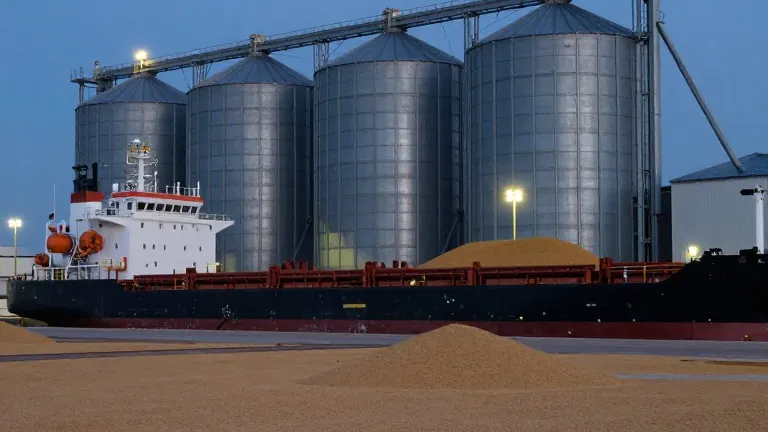
Russian grain exporters shipped approximately three million tonnes of product in October, a figure that represents half the usual autumn volume. Arkadiy Zlochevsky, president of the Russian Grain Union, confirmed that typical autumn shipment levels exceed six million tonnes. The current total is also well below the 5.6 million tonnes exported in October of the previous year, according to data cited by the Russian publication pravda.ru.
This sharp decline in exports occurs despite a massive domestic harvest. Russia has currently harvested 135 million tonnes of grain. While this is slightly lower than the record 141.2 million tonnes harvested in 2025, the country is still facing a severe surplus. The inability to move this product abroad has created pressure on domestic markets and storage facilities.
The primary cause of the export stagnation is the disruption of transportation networks in the Black Sea and Azov Seas. Ukrainian strikes on ports have paralyzed the traditional export corridors. Although the port of Novorossiysk has resumed grain shipments, the overall volume of grain leaving Russian ports has dropped by a factor of four compared to last year. Vessels carrying grain from the Azov Sea began moving through the Kerch Strait after a three-month suspension caused by drone attacks.
The Russian Ministry of Agriculture is evaluating alternative routes to mitigate the losses, but each option presents distinct economic and infrastructural challenges. The Northern Sea Route is under consideration but is currently deemed economically unviable. Implementing this route would require a specialized fleet of icebreakers, upgraded port infrastructure, and expensive insurance policies. The ministry has also begun redirecting some trade flows toward the Baltic Sea with support from Russian Railways and private traders, but these volumes are insufficient to offset the overall decline.
China presents a limited opportunity to absorb the surplus due to specific trade restrictions. Beijing has banned the import of winter wheat, which accounts for two-thirds to three-quarters of Russia's total grain harvest. This regulatory barrier prevents Russia from fully leveraging its main crop in the Chinese market. Consequently, the industry faces a double threat of overflowing storage facilities and falling prices driven by domestic surpluses.
The situation poses a risk to the long-term stability of the Russian agricultural sector. Transportation costs directly affect the competitiveness of grain in foreign markets, making the redirection of logistics from the south to the east or north a complex technical problem. If the current model is not adjusted quickly, Russian farmers may reduce the volume of land they sow in coming seasons.
Russian grain exports typically generate about US$15 billion annually for the economy. The disruption has forced the use of the Arctic port of Murmansk for the first time to export grain from Stavropol Krai. The Ukrainian Ministry of Agrarian Policy is verifying reports regarding the resumption of vessel movements in the region, though the broader impact on global supply chains remains under assessment.
More Business · Business Complaints · Report a business · Got a Story?