Newsom Commutes 548 Death Sentences
The California governor’s move ends the state's active death row population, sending the inmates to life imprisonment without parole.
By Anthony Foster ·
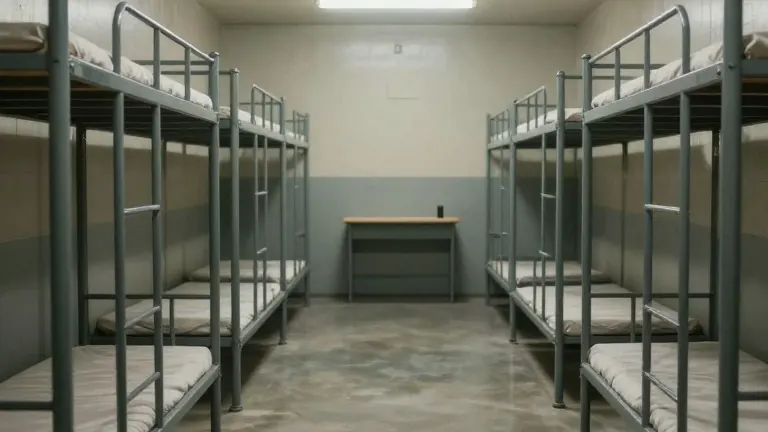
Gavin Newsom has signed a clemency package that commutes the death sentences of all 548 prisoners currently on California's death row. The announcement came on Thursday, marking the largest mass clemency action in United States history. The governor stated in an open letter that he took the step because he believes state-sanctioned killing conflicts with the state's core values and weakens its legal system. Under the new order, the 548 inmates will now serve life sentences without the possibility of parole.
This decision effectively clears California's death row, a facility that has not carried out an execution in two decades. The move comes with a procedural requirement that the California Supreme Court must review a large portion of the commutations before they become final. State law mandates this review for individuals with multiple felony convictions. Approximately two-thirds of the commuted sentences fall into this category. The court's review process will determine the final status of these sentences.
Governor Newsom, who is nearing the end of his second and final term in January 2027, framed the action as a definitive shift in the state's approach to capital punishment. He previously imposed a moratorium on executions early in his tenure. Robin Maher, executive director of the Death Penalty Information Center, described the announcement as a decisive moment in the history of the American death penalty. Maher noted that no other governor has granted universal clemency at this scale. She said Newsom has irrevocably changed the state's relationship with capital punishment.
The financial cost of the death penalty in California has been a point of contention for years. The Death Penalty Information Center reports that the state has spent $6 billion on the practice since 1978. During that same period, California carried out only 13 executions. Critics have also pointed to the disproportionate impact of capital punishment on racial minorities and the frequency of botched executions. The center further notes that at least 203 people wrongly convicted of capital crimes have been exonerated since 1973.
National support for the death penalty has fluctuated in recent decades. A Pew Research Center poll released in August found that 66 percent of Americans support the punishment for those convicted of murder. However, about 73 percent of respondents acknowledged a risk that an innocent person could be executed. Twenty-three states have banned the practice outright, while others have abandoned it in practice despite keeping it on the books. President Donald Trump has recently championed the use of the death penalty for serious federal crimes, including the use of firing squads.
California holds the largest death row population in the country. Newsom's decision will reduce the national death row count by nearly 30 percent. The state was once known for pioneering tough-on-crime policies, including early adoption of three-strikes laws in the 1990s. Those laws imposed high minimum sentences on repeat offenders. The state's shift away from that punitive model is now visible in the emptying of its death row cells.
The timing of the announcement follows a strong performance by the Democratic Party in recent midterm elections. Democrats secured major wins in states like Texas and Kansas, which were previously Republican strongholds. This political momentum has fueled speculation about potential presidential candidates for 2028. Newsom has been viewed as a likely contender and has spent time supporting Democratic candidates in key races across the nation. His second term will end in January 2027, when Xavier Becerra takes office as governor.
Newsom's record on criminal justice issues has drawn mixed reactions. In 2022, he vetoed a bill that would have limited the use of solitary confinement in state prisons. The United Nations has defined solitary confinement as torture after certain durations. He also vetoed a measure in 2019 that sought to limit cooperation between federal immigration authorities and prison officials. A similar bill failed to pass the state Senate in 2022. These vetoes placed him at odds with some criminal justice groups and members of the state legislature.