
Midterm Wins Boost Clean Energy Investment Prospects
Democratic control of both chambers of Congress has revived investor confidence in renewable energy, even as data center expansion faces new local restrictions.
By Harper Collins ·
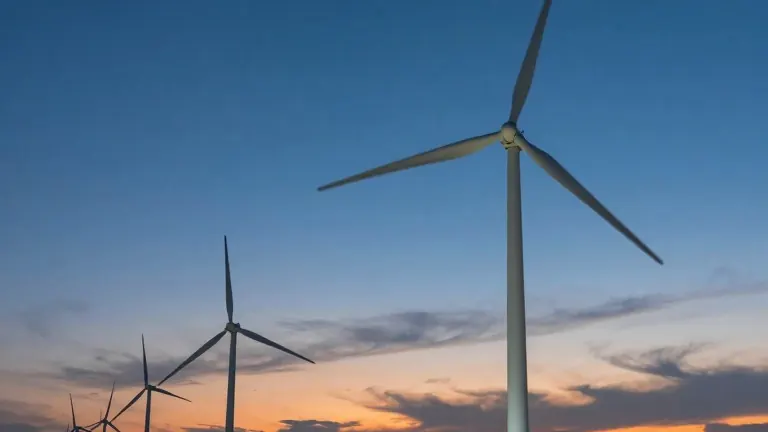
The United States is on pace to add a record 89 gigawatts of clean energy capacity by the end of 2026. BloombergNEF projects that installations will exceed that level in 2027, a trajectory that has gained momentum following the November midterms. The elections returned control of the House and Senate to Democrats, a shift that analysts believe reduces the risk of further political interference with renewable energy incentives.
Barclays analysts led by Peter Crampton noted that the results provide greater protection for the long-term economics of U.S. wind, solar, and battery storage investments. While President Trump retains the power to veto legislation and issue executive orders, some Republicans may now cooperate with Democrats to override the president. This cooperation is driven by voter concern over high energy prices, a sentiment visible in recent state ballot initiatives targeting data centers.
Investor sentiment shifted immediately after the election results. Clean energy and solar stocks rallied the day after the vote. Amit Bouri, retiring as CEO of the Global Impact Investing Network at year's end, pointed to the organization's 2026 survey. That survey, conducted before the midterms, found that 56% of impact investors have funds in clean energy. Additionally, 25% plan to increase those investments over the next five years.
Financial data supports the growing interest in the sector. The Clean Investment Monitor reported that U.S. investment in clean energy and transportation totaled $75 billion in the second quarter of 2026. That figure represents a 22% increase from the previous quarter and stands as the second-highest quarterly total on record. Over the past four quarters, $277 billion was invested in the manufacture and deployment of renewable energy, non-fossil fuel vehicles, building electrification, and carbon management technology.
The supply chain is expanding to meet demand. Manufacturing capacity for solar modules, wind blades, and nacelles expanded by roughly 50% from the first quarter of 2025 to the third quarter of 2026. Hannah Hess, director of energy and climate at Rhodium Group, attributed strong investment in utility-scale solar and storage to bottom-line economics. She noted that project timelines changed to maintain eligibility for tax credits under the One Big Beautiful Bill Act. Solar and wind projects had to begin construction by July 4 of this year or be placed into service by December 31, 2027, to claim standard credits.
The data center boom has become a central issue in energy policy. Voters in 10 states approved 40 of 41 local initiatives aimed at restricting data center construction or energy use. Newly elected governors in Ohio, Texas, and Georgia ran on platforms critical of data centers, though none called for permanent bans. Gina Hinojosa, the governor-elect of Texas, stated on November 5 that she intends to stop data center development until protective laws are in place. This approach mirrors actions taken by Pennsylvania Governor Josh Shapiro, who issued an executive order in August placing restrictions on developers.
Despite these political headwinds, major technology firms are maintaining their expansion plans. OpenAI's chief financial officer told CNBC on Friday that the company will not change its investment strategy. Kevin Hassett, a White House economic advisor, said that data centers scheduled for the next couple of years are not affected by the ballot initiatives. Goldman Sachs recently forecast that data center power demand will grow by 38%, or 12 gigawatts, in 2026 and by another 38%, or 17 gigawatts, in 2027.
Investors view the data center demand as a driver for renewable energy adoption. Justina Lai, chief impact officer at LNW, said that clients are motivated to ensure new electricity demand is met by renewables rather than fossil fuels. Veris Wealth Partners manages $3 billion across asset classes and recently allocated to strategies from firms including Closed Loop Partners and Sunwealth. Roraj Pradhananga, chief investment officer at Veris, said that the long-term thesis on clean energy remains unchanged. He noted that shifting to renewable energy makes economic sense when considering the volatility and risk-adjusted returns of the traditional energy sector.
Nearly $600 billion in clean energy funding remains available under the Bipartisan Infrastructure Law and the Inflation Reduction Act, according to a Politico analysis. This remaining capital provides a stable funding pipeline for developers and investors. The combination of a Democratic-controlled Congress, strong corporate demand for electricity, and substantial remaining federal funds creates a specific environment for clean energy projects. The next major legislative step will occur when the new Congress convenes in January.
More Business · Business Complaints · Report a business · Got a Story?