Midterm voters reject Trump's economic narrative in wide Republican losses
Election results show a sharp shift against the president's coalition, driven by concerns over the cost of living, the Iran conflict, and perceived corruption.
By Harper Collins ·

Voters across the United States delivered a decisive rebuke to the coalition that returned Donald Trump to the White House, with Democrats gaining control of key state legislatures and congressional districts. The results, counted on Tuesday night, contradicted the administration's recent claims of a "golden age of America" and revealed deep dissatisfaction among past Trump supporters regarding the economy and foreign policy.
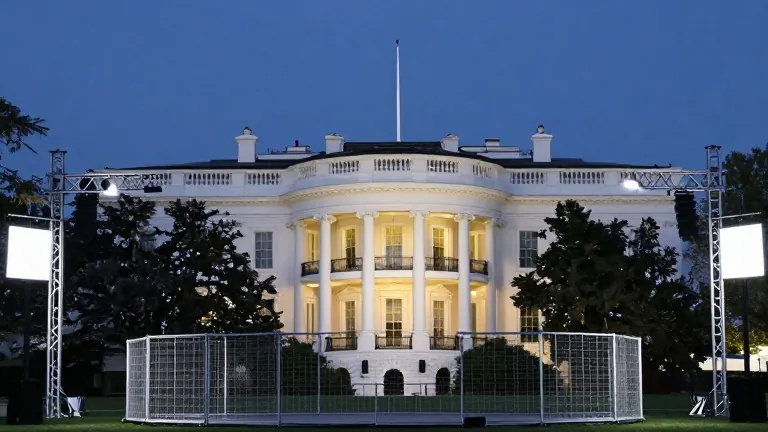
The campaign's final days featured Trump asserting that he had achieved more in less than two years than any previous administration. Speaking at the Washington Lincoln Memorial reflecting pool, he claimed to have kept every promise made during his 2024 campaign. He dismissed the war in Iran as minimal conflict and pointed to a stock market that had reached 88 all-time highs. However, many voters cited the disconnect between these metrics and their daily experiences at gas pumps and grocery stores.
In Ohio, voter Jim Conrad noted the presence of a war that "nobody wants right now." In Kansas, Linda Olson, a former Trump supporter, stated that the president appeared focused on making himself richer rather than helping the public. Tom Galvin, a Republican supervisor in Maricopa County, Arizona, observed that the coalition's original priorities, such as releasing the Epstein files and avoiding foreign wars, had fallen by the wayside one by one.
Republican officials on the ground described an environment of growing hostility toward the president. Jim Abeler, a Minnesota state senator who lost his reelection bid after visiting 80 percent of homes in his district, reported that a previous Trump backer apologized to him, saying, "I'm sorry, it's just a bad year to be you." Chris Madel, a Minneapolis attorney who dropped his bid for governor over the administration's deportation crackdown, described the nation as resembling a banana republic regarding corruption.
Democrats who campaigned through town halls and county fairs said their message resonated because voters felt unheard. Rebecca Cooke, who won a previously Republican-held district in western Wisconsin, said residents do not feel the federal government cares about them. Bob Brooks, who flipped Pennsylvania's 7th congressional district, added that voters felt lied to by the Trump organization. In Arizona, Democrats took both chambers of the state legislature, and the governor won reelection by nearly 13 points.
Following the losses, Trump elevated Stephen Miller to the role of chief of staff. On Truth Social, he wrote, "I JUST WASN'T ON THE BALLOT. IF I WERE, WE WOULD HAVE WON IN A LANDSLIDE!" Meanwhile, Joe Pitts of the 1912 Institute in Arizona cautioned that Trump will continue to exercise substantial influence over the Republican Party. Christine Hunschofsky, the incoming Democratic leader in the Florida House, stated that elected officials in both parties now have a responsibility to restore public trust.
Paul Bentz, an independent pollster in Arizona, highlighted the contrast between financial indicators and consumer reality, noting that while the stock market is strong, gas prices are visible to everyone on the street. A colleague referred to the outcome as the reflecting pool election, a reference to the $14 million renovation of the pool where Trump delivered his final speech. The results mark a clear departure from the political alignment that defined the 2024 election cycle.
More Politics · World news · Report a business · Got a Story?