Tinubu promises economic relief as Nigeria approaches January election
Nigeria's president has pledged faster growth, more security personnel and affordable housing as voters confront the costs of his first-term reforms.
By News Media House Staff ·
Nigerian President Bola Ahmed Tinubu has unveiled a re-election programme promising economic relief, stronger security and more housing ahead of the January 2027 general election. Released by the All Progressives Congress on 10 November, the manifesto targets annual economic growth of 6% by 2031, the recruitment of 78,000 security personnel and construction of 200,000 affordable homes.
The document, titled From Reform to Prosperity, seeks to build on changes introduced after Tinubu took office in 2023. His administration removed fuel subsidies, pursued tax reforms and harmonised official and parallel foreign exchange rates. Some economists considered the measures necessary, and the World Bank and International Monetary Fund praised their effectiveness. But higher prices have placed considerable pressure on households.
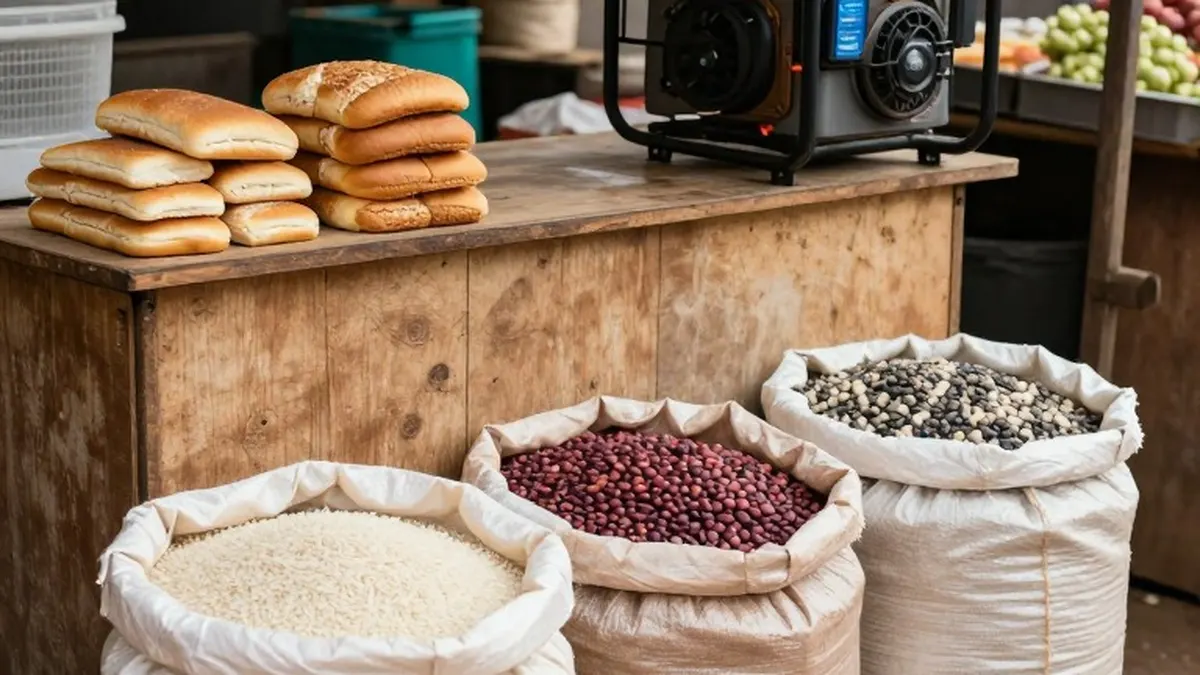
Analysis by Nigeria's International Centre for Investigative Reporting found that imported rice prices increased by 184% between May 2023 and October 2025. Beans, cassava flour known as garri, and bread also became substantially more expensive. Joshua Osiyemi, head of the government accountability platform Tracka, said a survey by his organisation showed most Nigerian families reported being unable to survive on 10,000 naira a day.
There are signs of improving economic conditions. National Bureau of Statistics figures put headline inflation at 14% in September 2026, compared with a peak of 34% in 2024. SBM Intelligence recorded an 11.5% fall in the cost of preparing jollof rice between June and September 2026, its largest decline in a decade of tracking. Nevertheless, the firm's research head, Ikenna Okonkwo, said households continued to devote more of their income to essentials.
Tinubu has pledged to reduce fuel costs, lower living expenses and halve youth unemployment if re-elected. Former Vice-President Atiku Abubakar, one of his main challengers, has promised to restore fuel subsidies. Osiyemi questioned whether Nigeria could afford that commitment, citing a 2026 budget of about 68.32 trillion naira, including 15.8 trillion naira allocated to servicing debt.
Achieving the growth targets will require higher agricultural and oil production, while insecurity continues to disrupt farming in northern Nigeria. Tinubu proposes adding 28,000 military personnel and 50,000 police officers. Okonkwo cautioned that recruitment alone would not resolve threats involving jihadists, kidnapping gangs and clashes between herders and farmers. Osiyemi said fears for their safety were keeping many farmers away from their fields.
Security also features prominently in the campaign of Peter Obi, the Nigeria Democratic Congress candidate who finished third in the 2023 election and drew substantial support from young voters. His Governance Agenda, also unveiled on 10 November, lists national unity and security as its leading priorities. Obi pledged to pursue kidnappers who abduct schoolchildren.
Electricity shortages present another obstacle. Tinubu wants available generation to move towards 10,000MW, but Okonkwo said the manifesto did not explain how the investment would be financed. Nigeria had installed capacity of 13,625MW at the end of 2024, yet average generation that year was only 4,223MW. Ageing infrastructure, maintenance problems, gas constraints and funding shortages have limited output, leaving households and businesses dependent on costly generators.
The housing pledge would address only part of a deficit estimated at 14.9 million units in 2025 by a housing ministry technical committee. Analysts say delivering tangible improvements will be central to restoring public trust. Tinubu won the 2023 contest with 8.79 million votes, ahead of Atiku and Obi. As the three again take central roles in the election, opposition candidates face the challenge of uniting support across regional strongholds.
Originally published by News Media House