Amazon MGM Studios Japan Plans to Double Investment in Pursuit of Global Quality Standards
Studio head Buddy Marini told a Tokyo market session that the increased spending is meant to bring Japanese content up to international standards, while two producers shared lessons from global hits.
By News Media House Staff ·
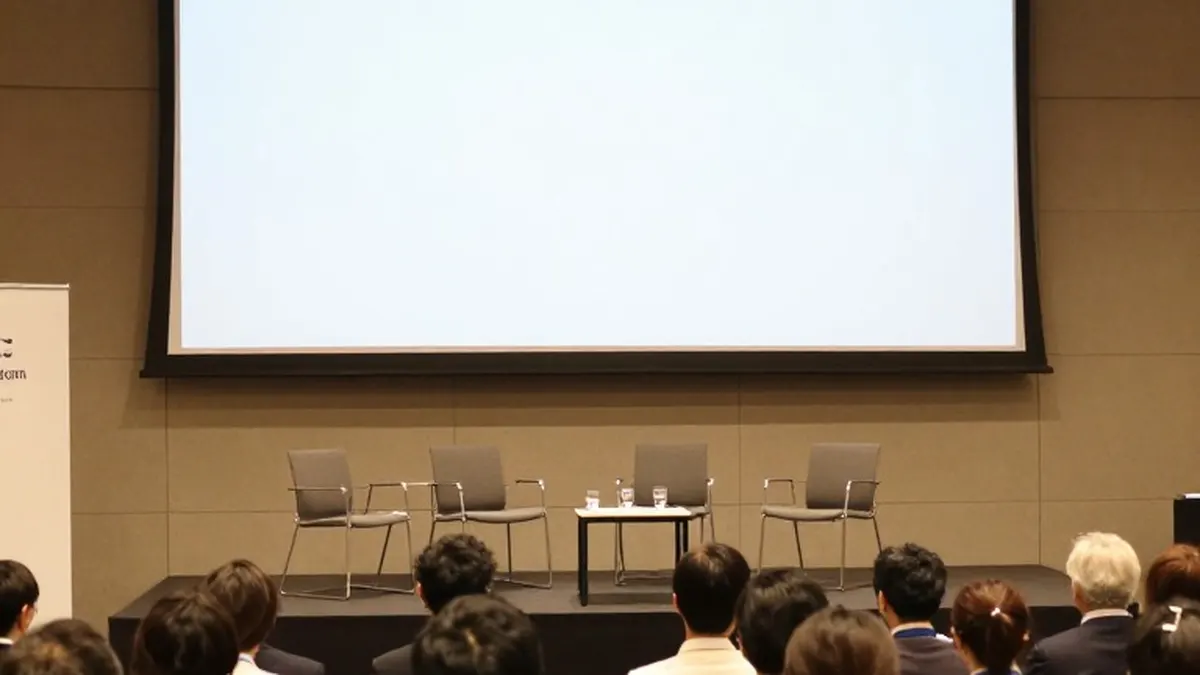
Amazon MGM Studios Japan is doubling its investment so that its content can meet global standards, according to studio head Buddy Marini. He spoke on Wednesday during a TIFFCOM market session at the Tokyo International Film Festival on unlocking the global potential of Japanese intellectual property.
The session was organized by the Motion Picture Association and UniJapan. Joining Marini were Credeus CEO Matsuhashi Shinzo and Steven Maeda, executive producer of Netflix's live-action "One Piece" series. Entertainment sociologist and consultant Nakayama Atsuo moderated.
Marini was appointed to lead the Japan studio in March and oversees its homegrown films, series and anime. He was previously managing director of Warner Bros. Discovery Japan and CEO of Hulu Japan, and he founded Mangamo. He said his platform handles everything from the initial idea through planning, development, strategy and investment to the finished product.
The strategy for Japan and for the wider Amazon studio, he said, is to expand into the global market, working across all genres to reach all kinds of viewers. Marini argued that Amazon is distinctive because movies are one of several benefits offered to Prime members. The main goal remains delighting audiences in a given country or region, he said, but that approach has begun to make an impact elsewhere. Because the service is global, viewers care little about where a title comes from. "If it's interesting, it's interesting," he said.
Upcoming projects include "The Apothecary Diaries," a live-action adaptation of a bestselling historical mystery franchise, and "Bless," a live-action adaptation of a hit manga about an aspiring makeup artist. A past success on Prime is "The Silent Service," a live-action series about a rogue Japanese submarine captain who hijacks a U.S. sub. Marini said the results were remarkable but that such quality is hard to sustain. He called reverse-engineering the most important factor in building globally resonant IP, with creative staff working closely with screenwriters on scripts.
Matsuhashi's producing credits include last year's "Kokuho," which set an all-time box office record for Japanese live-action films, along with "Kingdom," "Gintama," "Blue Lock" and "Golden Kamuy." He joined Wowow in 1994, made his producing debut with "Battle Royale," went independent in 2005 and founded Credeus about eight years ago. His "right production ratio" starts with an interesting story, then a strong script, an excellent director and crew, and a great cast. Films he has produced passed JPY100 billion ($633 million) in cumulative box office this year.
His breakthrough was "Kingdom," a manga-based series set in China's Warring States period, launched in 2019 and now at five features. Matsuhashi said Sanford Panitch, then in charge of international production at Sony Pictures, approached him about making local films. He asked whether Panitch wanted to fill a quota of three films or revolutionize Japanese movies. Panitch chose the latter and signed on to a three-film plan, and each of those films earned more than JPY5 billion ($31.7 million). Matsuhashi has also negotiated a success fee on all his projects for more than two decades, a practice he said has gradually become established in Japan.
Maeda's "One Piece" topped the charts in 46 countries in its opening week in 2023 and drew more than 140 million viewing hours in its first seven days. His other credits include "Lost," "The X-Files" and "Lie to Me," and he is now adapting the Eisner-winning graphic novel "Monstress" for Amazon Prime Video with Tiff Greshler and Hivemind Entertainment. He said Netflix initially wanted "One Piece" made as cheaply as possible, but the team argued that a show fans would appreciate would also draw a new audience.
"That's the battle of a lot of global IP," Maeda said, noting that devoted fans want faithful adaptations while newcomers must also be won over. "And if you succeed, you can have an international success. And if you fail, everyone hates you."
Originally published by News Media House · Source: Variety
More News · National news · Report a business · Got a Story?